I keep my fall garden tool comparison in the same place I keep everything else: a dated page in the Dirt Ledger, a kitchen scale on the bench, digital calipers in the drawer, and a mug of coffee going cold beside both. October in Sunbury is when the beds close down and the tools that looked wonderful in April have to answer for themselves. April is the month of marketing. October is the month of evidence, and the first hard freeze is the deadline that settles every argument I have with a spec sheet.
That habit is why this comparison is organized around four jobs instead of four products. A flat spade, an expandable hose, a frost cloth, and a cordless mower do not compete for the same slot on the dock. They compete for the same seasonal budget and the same few feet of shed wall, and that is the only contest worth scoring.
If you are building a fall kit from scratch, buy the flat spade first and the frost cloth second. Neither one depends on a battery, a rubber bladder, or a plastic fitting to do its job, which is exactly why both survive the winters that kill the other two.
The rest of this comparison is about why that ordering holds, what each tool hides from its own spec sheet, and what I will be checking when the ground finally locks.
The four tools side by side

Sharp Blade Spade Shovel Garden Flat Spades for Gardening and Edging
Flat, sharpened blade is the right geometry for edging beds and skimming weeds off the surface
No published steel hardness and no description of the tang, so the two things I check first are unknowns
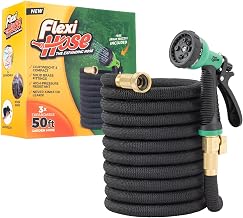
Flexi Hose with 8 Function Nozzle, 50FT - Lightweight Expandable Garden Hose, No-Kink Flexibility, 3/4 Inch Solid Brass Fittings and Double Latex Core
Brass fittings and a double latex core address the two parts that actually fail on expandable hoses
Expandable hose plus Ohio freeze-thaw is a fatal combination unless you drain and store it indoors
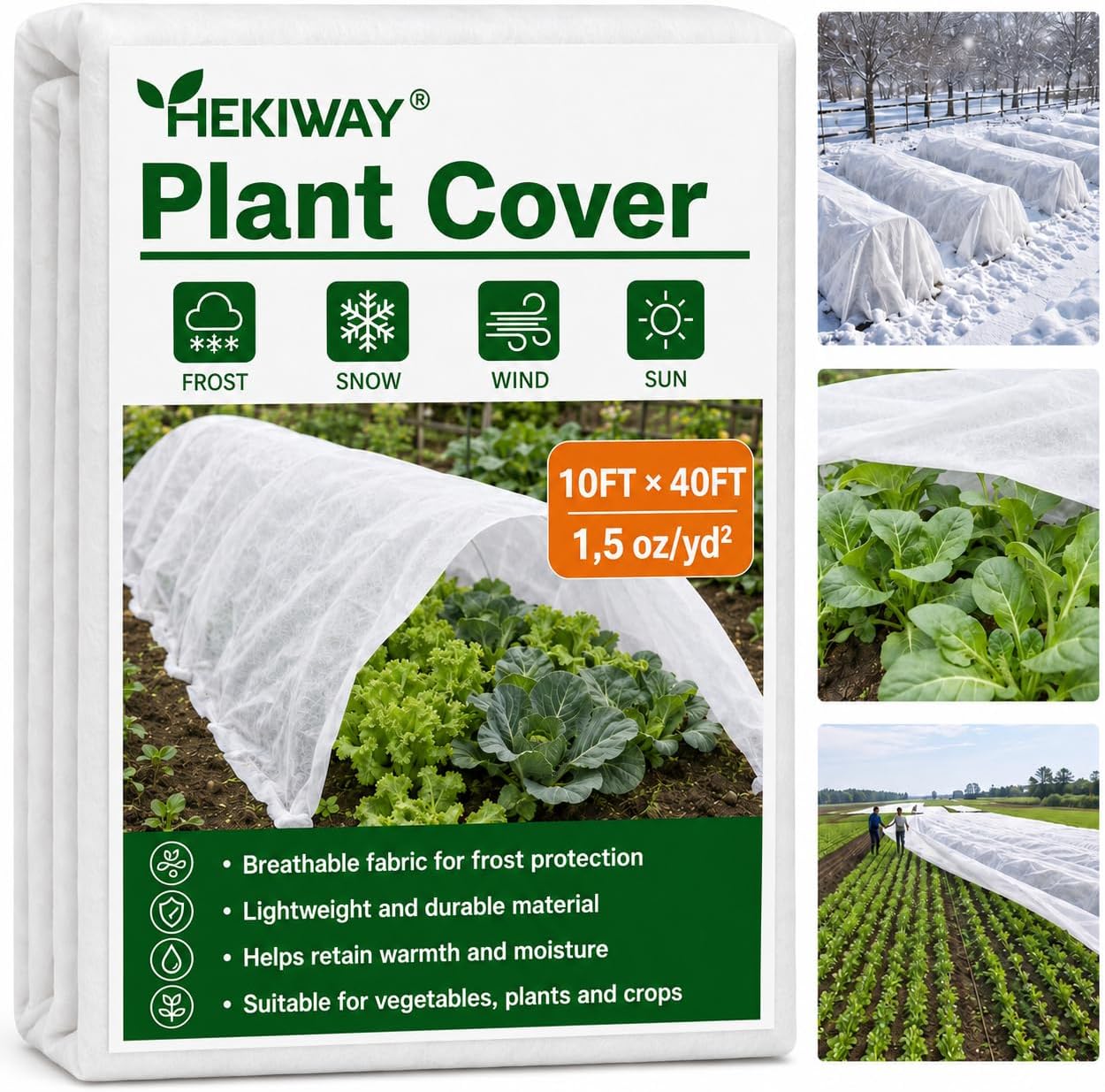
10 FT x 40 FT Frost Cloth, Plant Covers for Freeze Protection
10 by 40 feet covers a real bed or a hoop run, and frost cloth is the cheapest protection per square foot
Fabric weight and density are not published, and light row cover is not the same tool as a heavy frost blanket
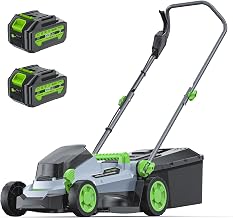
13 Inch Cordless Lawn Mower, 40V Electric Lawnmower for Garden/Patio/Yard
A 13-inch deck is the honest size for tight turf, between raised beds, and a small city lot
Small deck means more passes on open lawn, and the listing does not state battery capacity or runtime
Prices and availability were captured from Amazon Creators API and may change.
The questions I ask before anything earns a dock slot
Eight questions, same order, every time. What is the tang: full-length steel running up into the handle, or a welded stub? What is the handle made of: real wood, composite, or painted mystery? Is there a steel hardness number anywhere on the page? What does the kitchen scale say about swing weight? Does the ferrule sit tight on first use? At 25 hours, has the edge rolled or the finish flaked? At 100 hours, does it still do the job it did on day one? And after one winter of freeze-thaw, would I hand it to a neighbor without a warning attached?
Two of these four listings answer almost none of that, and that is information too. A product page that names 3/4 inch solid brass fittings and a double latex core is telling me where the failure points are and claiming to have fixed them. A page that says "sharp blade" and "durable" and stops there is telling me to buy it and find out, which is fine as long as I know that is the deal I am making.
That distinction is the spine of this comparison. Three of these four tools are built around a hard part that either holds or does not. The fourth is built around a battery, and batteries are the one component on this list that dies quietly in a cold shed.
Flat spade: the tool that does the most October work
A flat spade is not glamorous, and that is the point. In October it edges the beds so the grass stops creeping into the mulch, it skims chickweed and bittercress off the surface of a raised bed without turning the soil, and it lifts and divides perennials when the tops have died back. A round point digs holes. A flat blade cuts a line, and a clean line is most of what fall cleanup is.
The geometry here is correct for that job. The listing calls it a sharp blade spade shovel built for gardening and edging, which is exactly the shape I want: a straight edge, a flat face, and a head you can drive with a foot. What the listing does not give me is the two numbers I care about most. There is no stated steel hardness, and no description of the tang. On a spade, a soft edge rolls in clay by midsummer, and a short tang twists loose inside the handle the first time you lever a root out of glacial till. Neither failure shows up in April. Both show up in August.
So this is a tool I would buy with a specific test in mind. First use: cut one edging line along a bed and feel whether the blade wants to skate or bite. At 25 hours: caliper the edge in three spots and see whether it has rolled. At 100 hours: wiggle the head at the ferrule and listen. If the wood or composite under that collar has cracked, the tool is done, and no finish on the handle will hide it.
Expandable hose: convenience with a winter deadline
Expandable hoses fail at two places: the fittings and the inner core. That is not an opinion, it is where every one I have pulled apart has given up. So when a listing leads with 3/4 inch solid brass fittings and a double latex core, it is naming the right parts. Brass does not crack the way cheap pot metal does, and a double core is the difference between a hose that survives a season of being dragged around a corner and one that bulges and weeps by July.
The 50-foot length, the lightweight body, and the no-kink claim are all about daily use rather than durability. A 50-foot expandable hose is the right size for a 1/3-acre lot with beds scattered around a shed, because it collapses down to something you can hang on a single hook and forget about. The eight-function nozzle covers the range from a soft shower for seedlings to a hard jet for rinsing a mower deck, and honestly most people use two of those eight settings and ignore the rest.
Here is the part that matters in Ohio. Expandable hoses are rubber bladders inside a fabric sleeve, and water left inside a bladder through a freeze-thaw cycle is how you get a split hose in March. Drain it, coil it, and bring it inside before the first hard freeze. Do that and this is a two-to-three season hose. Leave it on the spigot and it is a one-season hose, and the listing will not warn you.
Frost cloth: the cheapest insurance in the lineup
A 10 by 40 foot frost cloth is the highest-value item in this comparison, and I will argue that with anyone. Forty feet of length covers a long bed, a row of fall greens, or a hoop run over raised beds, and 10 feet of width is enough to drape over a tomato cage or lay across a low tunnel. When a 28-degree night shows up three weeks before your average first frost, this is what stands between a bed of lettuce and a frozen mush.
The caveat is fabric weight, and this listing does not publish it. Frost cloth is sold by weight per square yard, and the difference between a light row cover and a heavy frost blanket is real: the light stuff buys you a few degrees and lets light and water through, the heavy stuff buys you more degrees and blocks more sun. If the number is not on the page, judge it by hand when it arrives. Hold it up to a window. If you can read through it easily, it is a light cover, and you should plan to double it on the coldest nights rather than trusting one layer.
Two rules for using it well. Do not let the fabric rest directly on foliage, because the leaves touching it will freeze first. And pull it back in the morning once the temperature climbs, because a plant left under cover through a warm, humid day is a plant inviting mildew. Folded and stored dry in a shed, a frost cloth like this one lasts for years.
Cordless mower: the one that lives or dies by its battery
A 13-inch, 40V cordless mower is a specific tool for a specific yard, and I want to be clear about which yard. It is the right machine for a small city lot, for the strip of turf between raised beds, for a patio edge, and for the tight corners where a full-size mower cannot turn without tearing up the bed. It is the wrong machine for anyone mowing a half acre of open lawn, because a 13-inch deck means a lot more passes and a lot more walking.
The listing states the deck size and the voltage and stops short of the two numbers that decide whether a cordless mower is worth owning: battery capacity and runtime. Voltage alone tells you almost nothing. A 40V platform can carry a small battery that quits after fifteen minutes or a large one that finishes a small yard twice. Before buying, check what amp-hour rating comes in the box and whether the battery is shared with other tools in the same line, because a battery you already own is worth more than a spec sheet.
Then there is winter storage, which is where cordless tools actually die. Do not leave the battery in a shed through an Ohio freeze-thaw cycle. Charge it to roughly half, bring it inside, and store it somewhere that stays above freezing. A battery treated that way will still hold a charge in April. A battery left on the mower under a tarp will not.
Price per season of service
The only honest number for a garden tool is price per season of service, and it is simple math once you stop thinking in purchase price. Take what a tool costs, divide it by the number of seasons it actually works, and compare that to the same figure for the alternative you were considering. A cheap spade that cracks at the ferrule in one August costs more per season than a good one that lasts eight years, even though the good one costs three times as much on the day you buy it.
Run that math honestly across this group and the ordering gets clearer. A frost cloth that lasts five seasons and saves one crop pays for itself in a single cold snap. An expandable hose that gets drained and stored every fall is cheap per season. An expandable hose that freezes on the spigot is expensive per season, and the fault is in the storage, not the hose. Check current Amazon price on each of the four before you decide, and then divide by the seasons you honestly expect to get, not the seasons the box implies.
The trade-offs, stated plainly
- The spade is the most useful tool here and the least documented, so you are buying geometry and taking the steel on faith until you cut a line with it.
- The expandable hose is convenient, light, and easy to store, but it needs to come inside before the first freeze or it becomes a one-season purchase.
- The frost cloth protects more square footage per dollar than anything else in the group, but without a published fabric weight you will not know how many degrees it buys until you use it.
- The cordless mower is the most expensive item here and the only one with a component that degrades whether you use it or not. Battery care is part of the ownership cost.
What I will be checking at the first hard freeze
When the ground finally locks, I want four things verified. The spade's edge, calipered in three spots to see whether it rolled or held. The hose, drained, coiled, and hanging inside the shed rather than freezing on the spigot. The frost cloth, dry and folded, ready for the first night that matters. And the mower's battery, indoors at half charge, because that is the difference between a tool that starts in April and a tool that gets replaced in April.
None of that is glamorous. It is the same eight questions, applied in the same order, to four tools that do four different jobs. The spade and the frost cloth earn their slots on merit. The hose and the mower earn theirs on how well you take care of them, which is the part no product page can sell you.