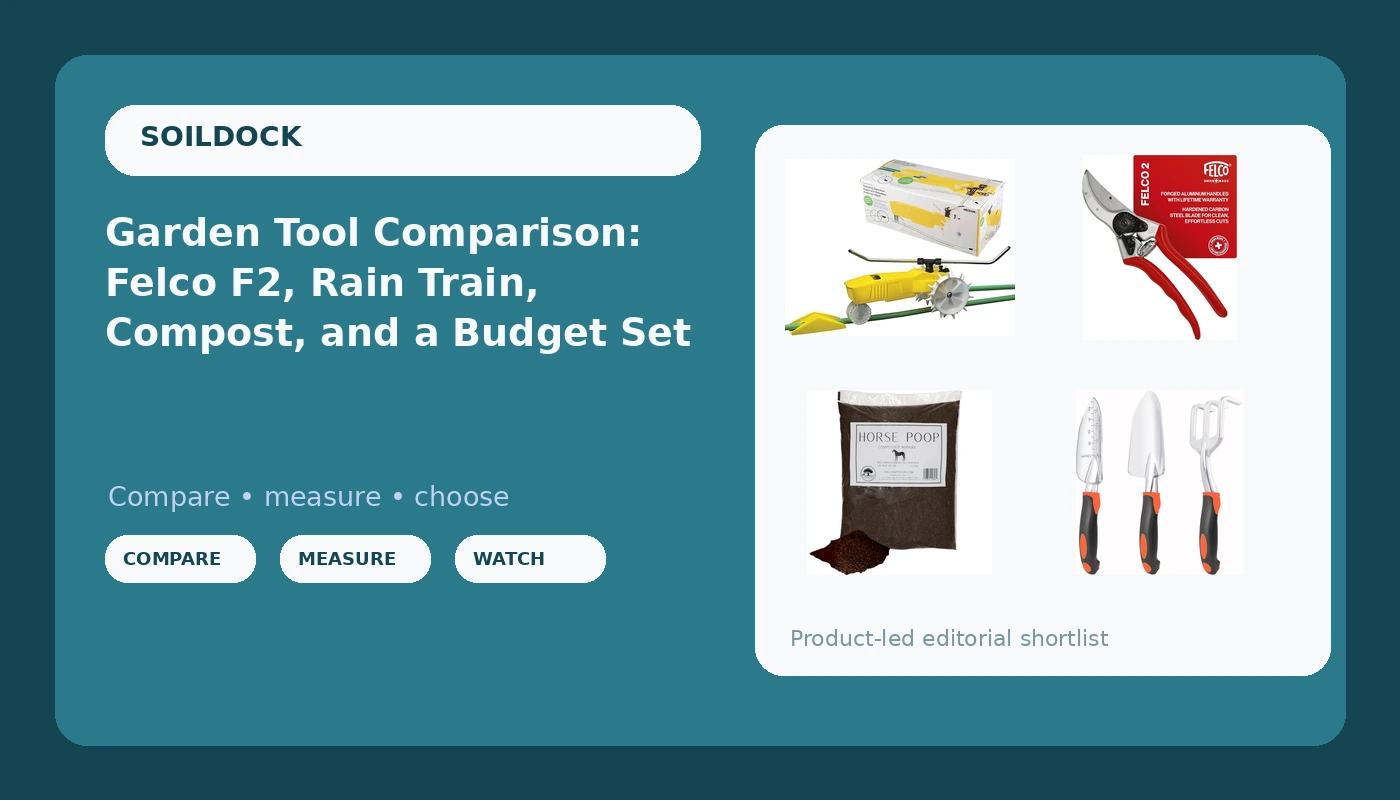
I spent twelve years behind a county extension soil desk reading other people's sample bags, and I have kept a dated tool log in my shed for longer than I like to add up. Four products ended up on this page because they answer one question from four directions: what does a garden actually need to get from the first thaw to the first hard freeze? If you are shopping for garden tools and lawn care essentials in a single pass, this is the short list, and the reasoning is different for every item on it.
If you buy one thing here, buy the Felco F2 pruning shears. It is the only product in this comparison with replaceable parts, and the only one I can speak to from a full season of cutting in my own beds. If you are starting from bare ground and need to be planting this weekend, the three-piece garden tools set puts a shovel, a trowel, and a rake in your hands and asks almost nothing of you. Everything after that depends on how much lawn and how much clay you are standing on.
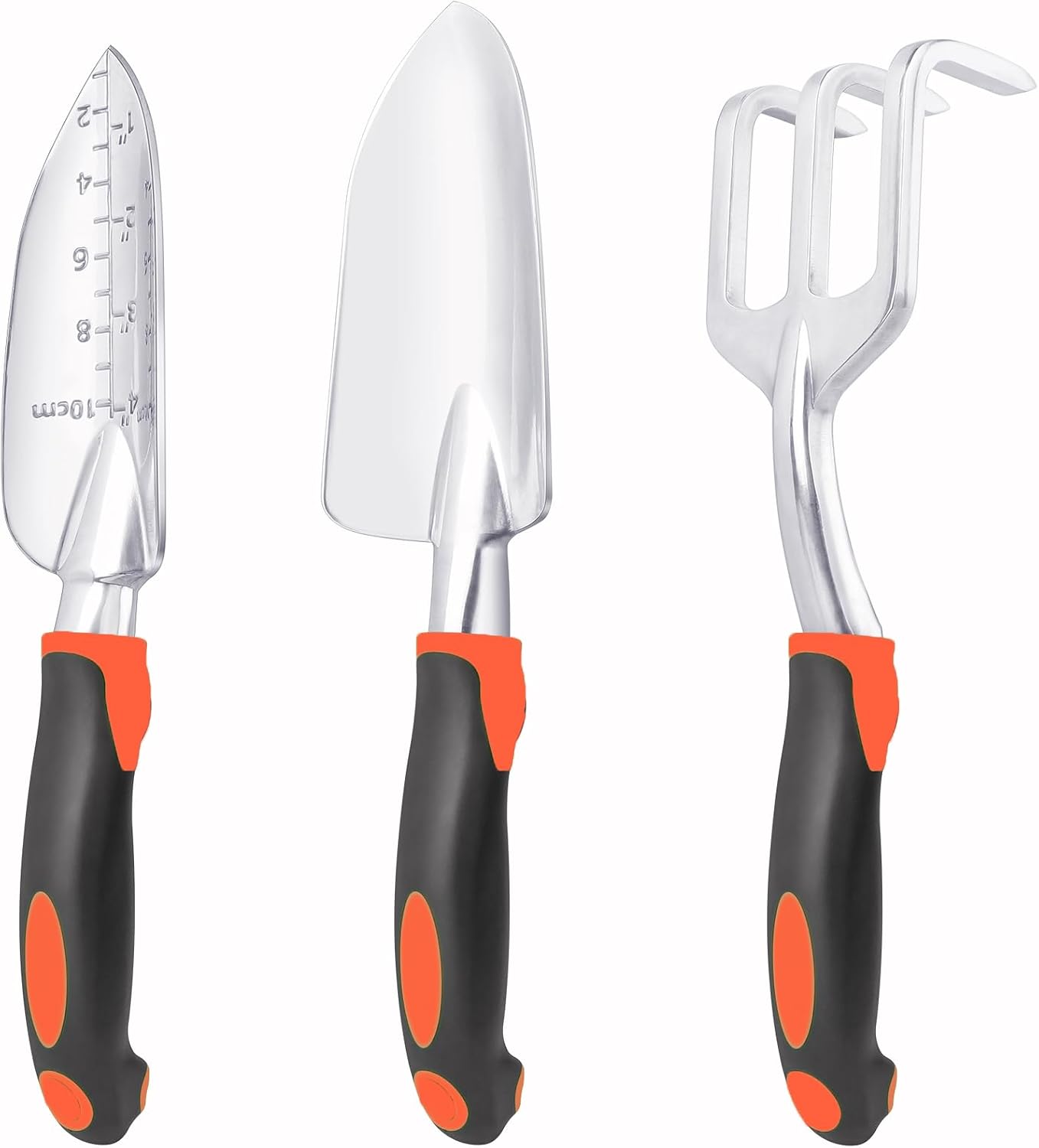
Garden Tools Set, 3 Pack Heavy Duty Gardening Tools Set
Three tools in one box, light aluminum alloy heads, and bright orange handles you can find in tall grass
No steel hardness or tang spec to check, no replaceable parts, and aluminum alloy heads are not clay digging material
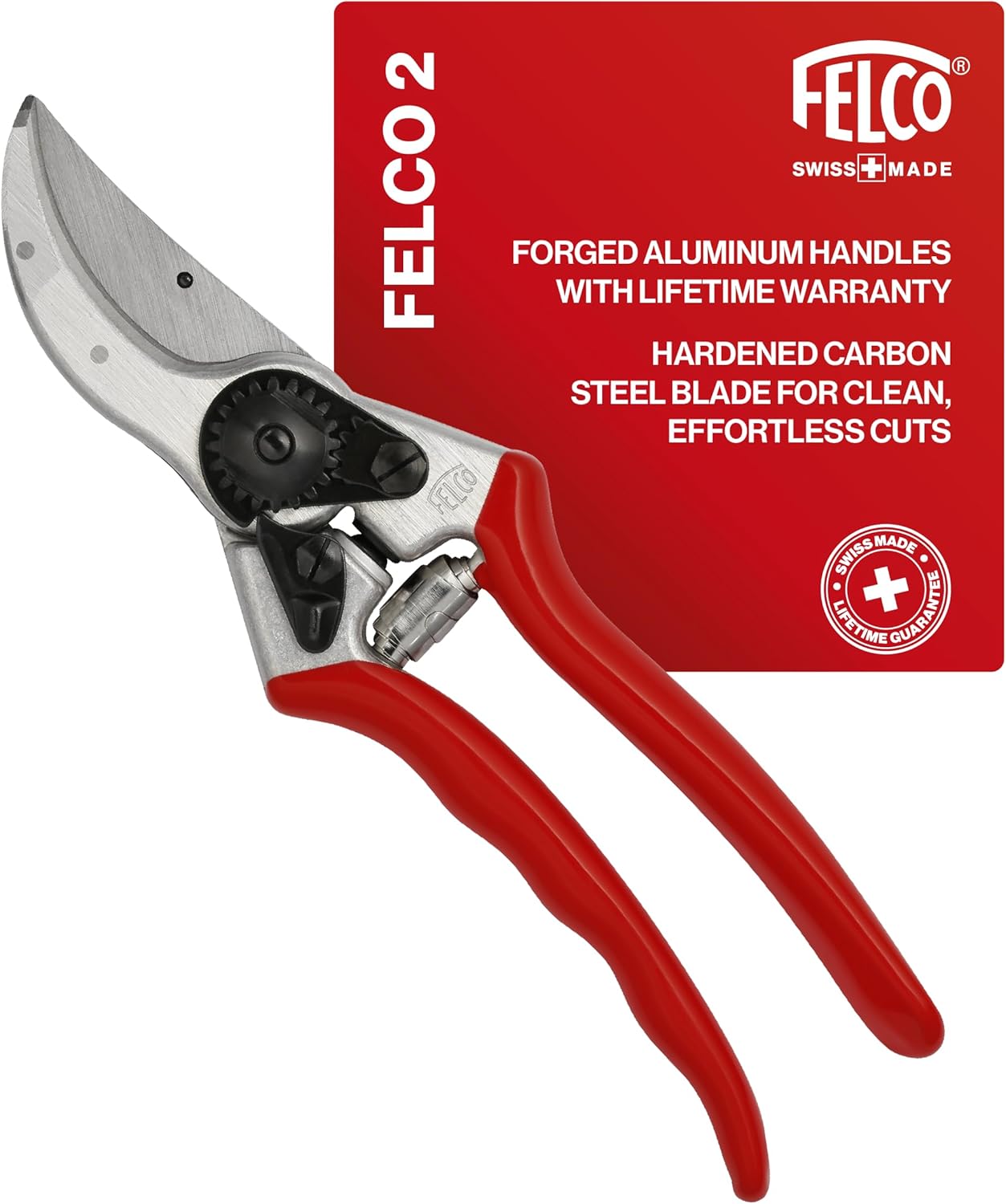
Felco F2 Pruning Shears
Forged aluminum body, replaceable blade and spring, and a bypass blade that still cuts clean after a heavy season of pruning
The most expensive single item here, and it is one tool with one job, so it rewards cleaning and oiling that casual gardeners skip
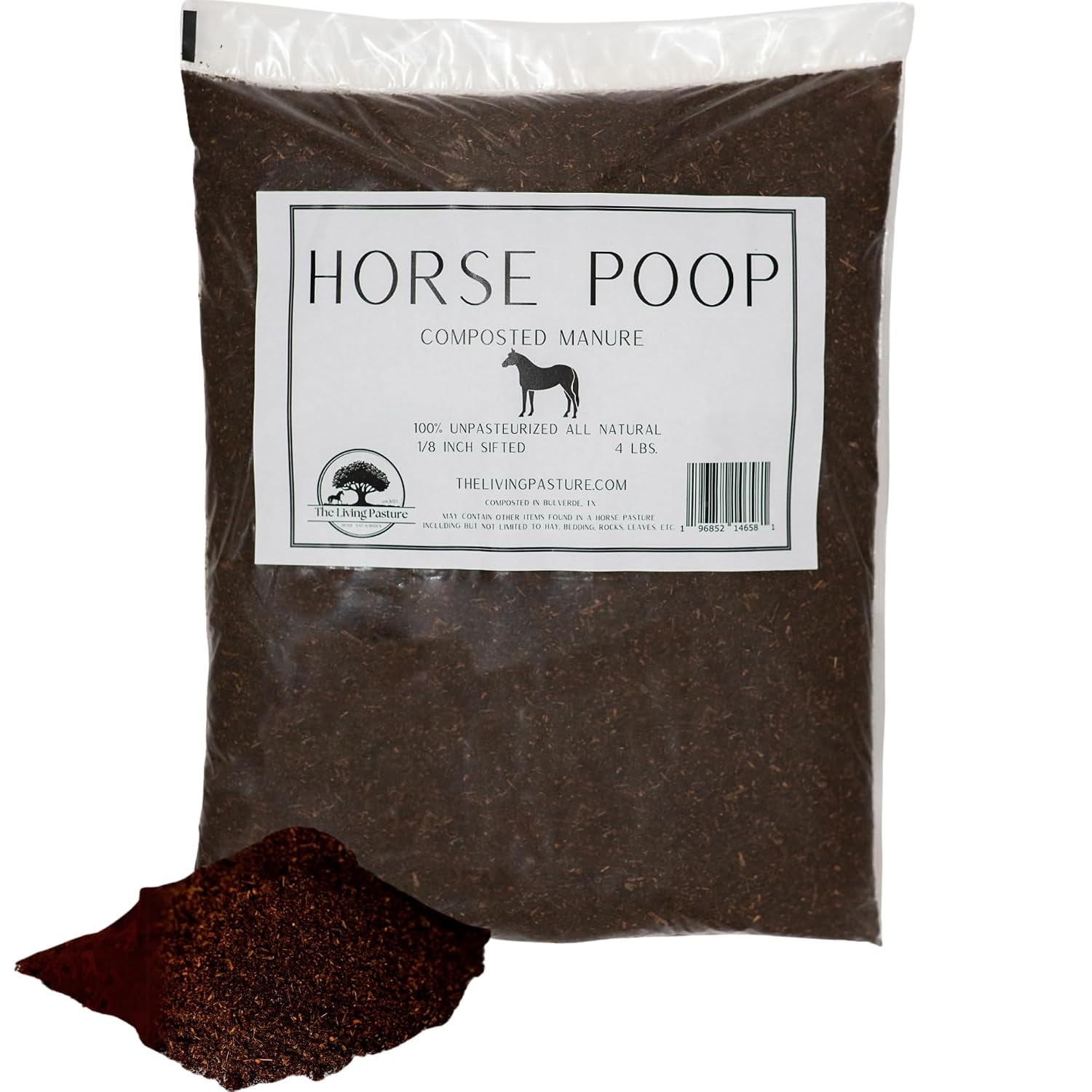
Horse Poop 100% Natural Aged Composted Manure
Feeds the thing clay is always short of, which is organic matter, and it works alongside every tool on this list
Bulky to store, a soil amendment rather than a cure, and one bag covers far less ground than most buyers expect
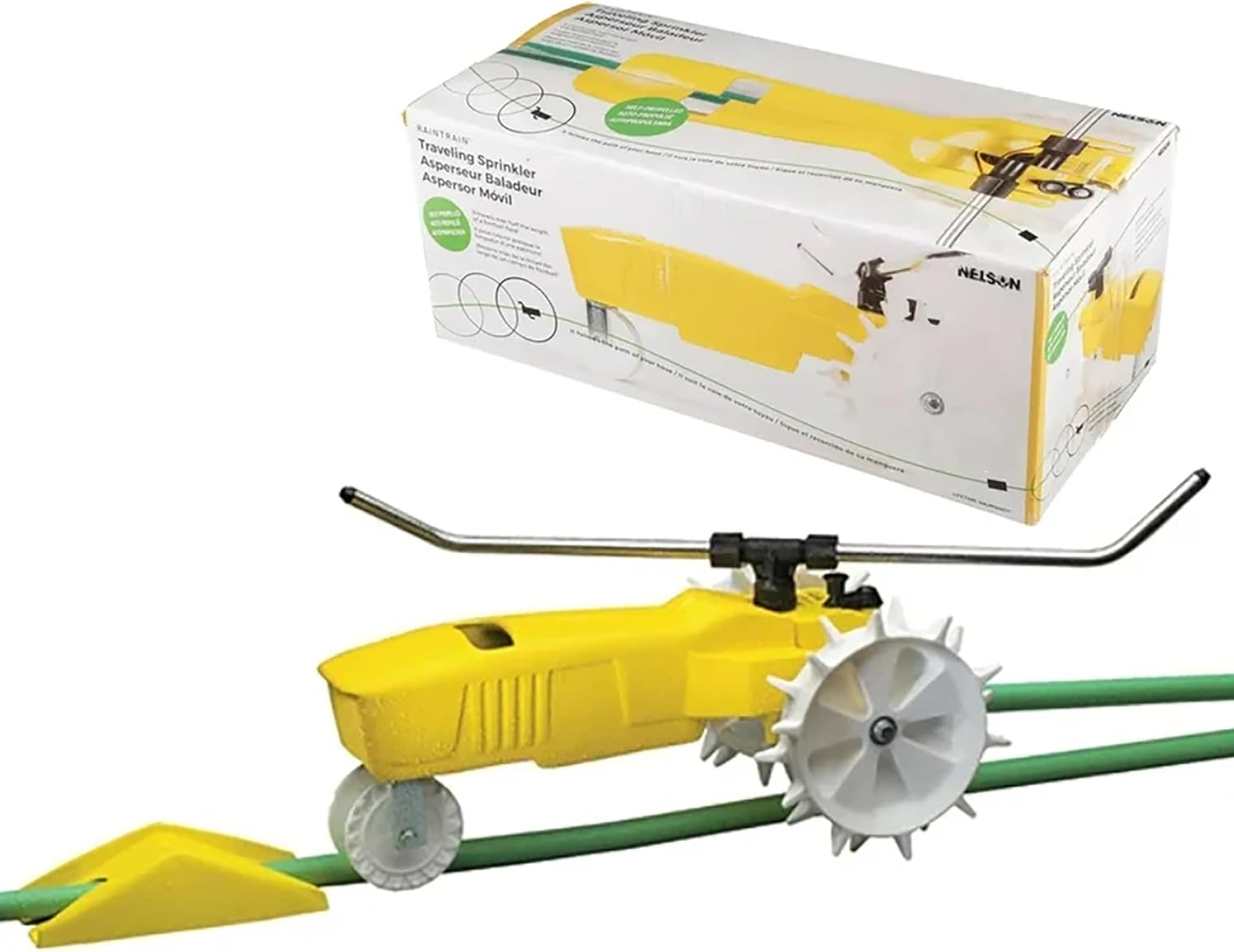
Nelson Rain Train 13,500 Square Feet Cast Iron Outdoor Lawn Traveling Water Sprinkler
Travels the length of a hose run with an auto shut off, so a long narrow strip of turf gets watered without you standing there
Needs steady pressure and a clear travel path, it is heavy cast iron, and it has to be drained before the first hard freeze
Prices and availability were captured from Amazon Creators API and may change.
How I judge a cart like this
Not everything here is a tool, so I score it two different ways.
For anything with a handle, the test has not changed since I left the extension desk: does it still do the job at hour 100 that it did in April? I weigh handles on a kitchen scale, check blade and edge wear with calipers every 25 hours, and wiggle the handle at the ferrule to feel whether the wood has started to move under the collar. Anything that fails gets photographed, dated, and written into the Dirt Ledger. April is the month of marketing. October is the month of truth.
Compost and water delivery get judged differently, because you cannot weigh a soil amendment on a kitchen scale and learn anything useful. A sprinkler either lays an even pattern across the strip or it does not. Compost either improves how water moves down into clay or it sits on the surface and dries into a crust that sheds rain like a roof. Those are the only two outcomes that matter.
The number that ties the whole cart together is price per season of service. A tool that survives one season is a rental. A tool you still reach for in year eight is the cheapest thing you own, no matter what it cost on the day you bought it. That math is why a replaceable blade outranks a pretty finish, every single time.
The Felco F2 pruning shears: the one item here I can vouch for from long use
I have logged roughly 300 hours on a pair of Felco F2s and burned through something like 10,000 cuts in a single season with them. The handles are forged aluminum, the blade and spring are replaceable, and mine still slices clean on the same factory edge. If you want to know what the 100-hour benchmark looks like in practice, it looks like a pruner that never needed a single repair while two of its competitors spent the summer in a drawer.
Here is what I check on any pruner before I recommend it. First, does it come apart with a screwdriver, or is it sealed into a disposable unit? A bypass pruner with replaceable parts is a repairable tool, and repairability is the difference between a decade of service and one bad August. Second, does the blade close cleanly against the counter blade, or does it chew stems and leave a ragged cut that invites disease? A clean cut heals. A crushed cut rots.
The honest trade-off is that this is a single-purpose tool, and it is the priciest item in this comparison. It also asks something of you that a budget pruner never will, which is ten minutes of cleaning and a drop of oil at the end of a heavy week. If your entire pruning career is deadheading annuals with stems you could snap with two fingers, this is more tool than your garden is asking for. The moment you start cutting woody stems, though, the calculus flips hard, because that is where cheap pruners fold.
The Nelson Rain Train: a sprinkler that does your walking
The Rain Train is the one product here that solves a labor problem instead of a materials problem. It is a cast iron traveling sprinkler that follows the hose like a train on a track, pulling itself back in as it goes, with an auto shut off at the end of the run. The listing puts coverage at 13,500 square feet, which is a claim about the length of the path rather than about your particular lawn, so read it as a ceiling and not a promise.
Where it earns its place is a long, narrow strip of turf, the kind of lawn that runs along a driveway or between a fence and a border. That is exactly the shape a fixed oscillating sprinkler handles worst, because you end up moving it three times to cover ground the Rain Train covers in one pass. Start it, walk away, and go do something that matters. Mine gets started and then ignored while I am pruning.
The trade-offs are real and they are mostly mechanical. It needs steady water pressure to pull itself along, so a weak spigot or a long skinny hose will leave it stalling in place. The travel path has to be clear of toys, stones, and edging, because cast iron does not negotiate. It is heavy enough that moving it is a two-hand job. And because the body and the gearing are cast iron, it belongs indoors or drained and dry before the first hard freeze. Freeze-thaw cycling is the torture test that cracks cheap plastic heads and rots anything that holds water, and a sprinkler left wet in an Ohio shed is a spring replacement, not a spring repair.
Horse Poop composted manure: fix the soil before you fix the tool
Most of the emails I answered at the extension desk were not tool questions at all. Somebody had bought grass seed three years running and could not understand why the lawn kept thinning, and the answer was never the seed. You do not have a grass seed problem, you have a compaction problem, and no pruner, sprinkler, or trowel will fix it. Organic matter will.
That is why a bag of aged, composted manure belongs in this comparison next to three tools. It is 100 percent natural, and the aged and composted part is the part that matters, because manure that has not finished breaking down can burn tender roots and carry weed seed along with it. Fully composted material is stable enough to work into a bed or screen across a lawn without that risk. It is the single input clay always wants, and clay is what most of us are actually gardening in.
The honest limits are logistics and math. A quarter inch of compost across a bed takes a startling number of bags, and if you are top dressing a large lawn, you will do the arithmetic twice and then call a bulk supplier. Bulk storage also matters: pile it somewhere dry and covered, because a wet bag of compost in the corner of a garage is a smell you will remember. And no amendment replaces a soil test. The bag tells you it is aged and composted. Your soil test tells you what your ground actually needs and how much of it, and no listing page can answer that for you.
The three-piece garden tools set: an honest starter kit
This set covers the three hand tools a new gardener reaches for first: a garden shovel, a transplant trowel, and a hand rake, with ergonomic handles and aluminum alloy heads in a bright orange that you will genuinely appreciate the first time you set one down in tall grass. It is the least expensive item in this comparison by a wide margin, and I am not going to pretend that makes it a bad buy. It makes it a specific buy.
Where it wins is light duty, and light duty is more of your gardening than you think. Raised beds, containers, potting benches, cultivating the top inch of a bed, raking out a seed row, and anything involving a child or a grandchild who wants to help. The aluminum alloy heads keep the whole set light, which matters if your grip is not what it was, and the ergonomic handles are shaped for a hand rather than for a display rack.
Where it loses is the ground I actually garden in. There is no steel hardness number on the listing, there is no tang spec, and there are no replaceable parts. On my glacial till clay, an aluminum alloy head is a light cultivation tool and nothing more; digging test holes with it would be a misuse, and the tool would be right to complain. That is not a defect, it is a category. A set built for containers and raised beds will last years under container loads and one bad afternoon under clay loads. Know which garden you have before you order.
The trade-offs the listings do not print
Three things never make it onto a product page, and they are the three things that decide whether you are happy in two seasons.
The first is repairability. The Felco F2 comes apart and takes a new blade and spring. The three-piece set does not, and a bent trowel is trash rather than a repair. I retired a pruner this fall because the rivet walked loose inside a handle I could not open, and that failure taught me more about buying than any spec sheet: a tool you cannot tighten is a tool you will replace.
The second is what happens between November and March. Freeze-thaw cycling is brutal on anything that holds water or cures under stress. Drain the sprinkler, wipe and oil the pruner, store compost dry and covered, and hang the hand tools off the floor.
The third is where tools fail. When a handle breaks, it breaks at the ferrule, the collar where handle meets head, and the cause is almost always a short tang that stops before the load does. Right now I am running the fall caliper check on my own tools, wiggle testing every ferrule and dating a photograph of each one, and the two failures on my bench this year were both at that collar rather than out at the working end.
Three carts, three different gardens
Four new raised beds and no lawn. Take the three-piece tool set and a load of composted manure. Skip the traveling sprinkler entirely; you will water raised beds with a hose wand and never miss it.
Half an acre of turf plus a shrub border. Take all four. The Rain Train handles the long strips, the Felco handles the woody cuts, the compost feeds the beds, and the set does the light work around the edges.
A town lot, containers, and one hedge. Take the Felco and the tool set, buy compost by the bag for the pots, and leave the sprinkler on the shelf. Cast iron needs a run of lawn to be worth its weight.
What happens after this fall's caliper check
I am pulling fourteen tools into the shed this month for the end-of-season pass: calipers on every edge, a handle wiggle at every ferrule, and a dated entry for each one in the Dirt Ledger before the first hard freeze locks the beds. The survivors get cleaned, sharpened, and hung. The failures get photographed and posted, because a painted handle that cracked at the collar teaches a reader more than a dozen tools that quietly did their job.
That is the standard I hold these four products to, and it is why the two with replaceable or long-service parts sit at the top of this page while the two that depend on your ground conditions sit below them. Not better, not worse. Appropriate, or not, for the garden you actually have.
Bottom line
The Felco F2 is the tool I would hand to my own grandkid, and it is the one product here with a documented multi-season record behind it. The Rain Train earns its keep on long turf strips and nowhere else. Composted manure fixes the soil problem that no tool can reach. And the three-piece set is an honest, light-duty starter kit that will serve a container gardener for years and a clay gardener for about one bad weekend. Match the item to the ground, and you will not be writing your own version of my Dirt Ledger.