The first hard freeze in central Ohio usually lands in the third week of October, and everything on my fall list has to be finished before it. That short window is why fall lawn and garden gear is never really about the gear. It is about four jobs that all come due at once: thin turf that needs seed while the soil is still warm, that new seed needing water on every day it does not rain, limbs that came down in the last storm and are still lying across a bed, and a place for next spring's lettuce that is not another frame bolted into the middle of the yard.
This fall lawn and garden gear comparison covers one item for each of those jobs. They are not a matched set and they do not pretend to be. Three of them are tools I would judge the way I judge anything that wants a dock slot: by the hardware, the fittings, and what happens after one winter of freeze-thaw. One of them is a bag of live seed, which is a different kind of purchase entirely, and I will say so plainly.
The most useful pick for most Ohio yards is the Scotts Turf Builder Rapid Grass Tall Fescue Mix, because fall is the one window when tall fescue actually establishes in our clay. But seed without water is bird food, which is where the Eden sprinkler earns its place, and the other two solve problems seed cannot touch.
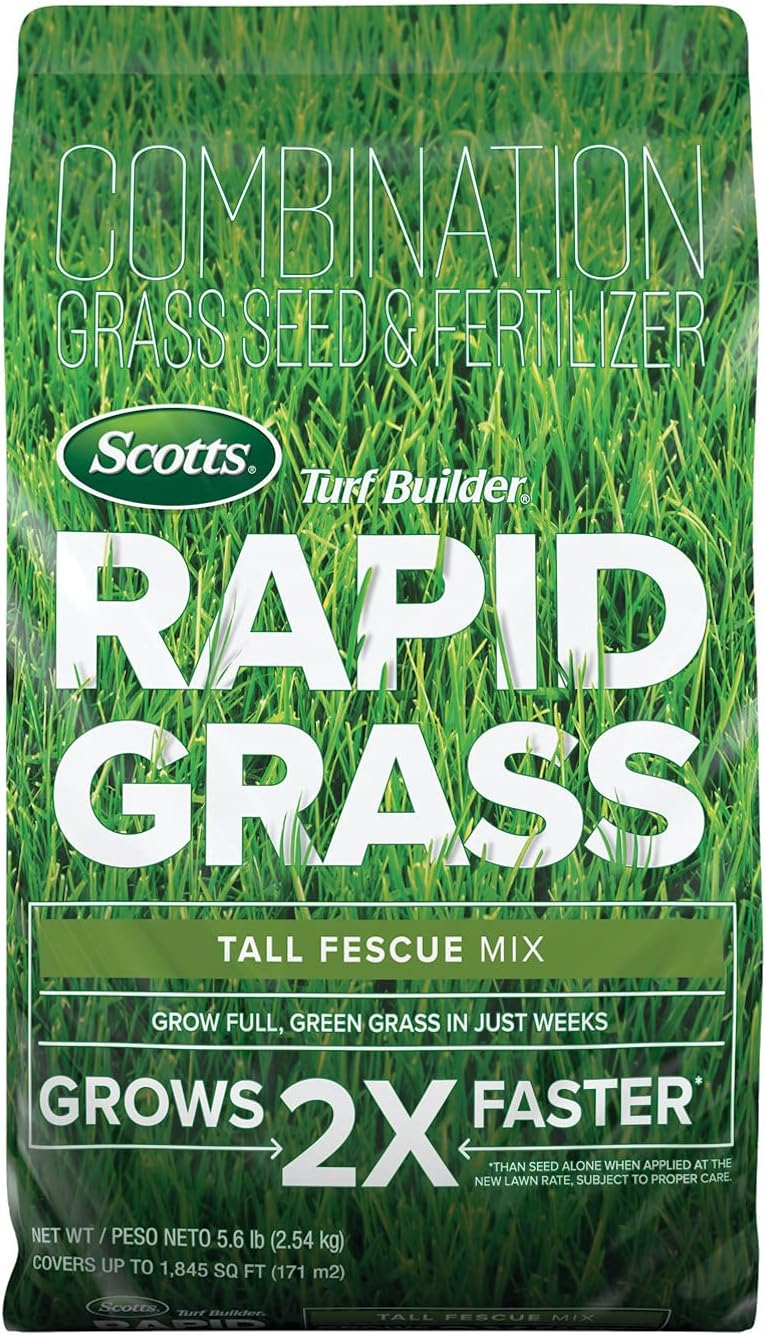
Scotts Turf Builder Rapid Grass Tall Fescue Mix, 5.6 lbs.
Correct species for the region, and fall is the window that works
Seed is alive: it fails without daily moisture and cannot fix compaction
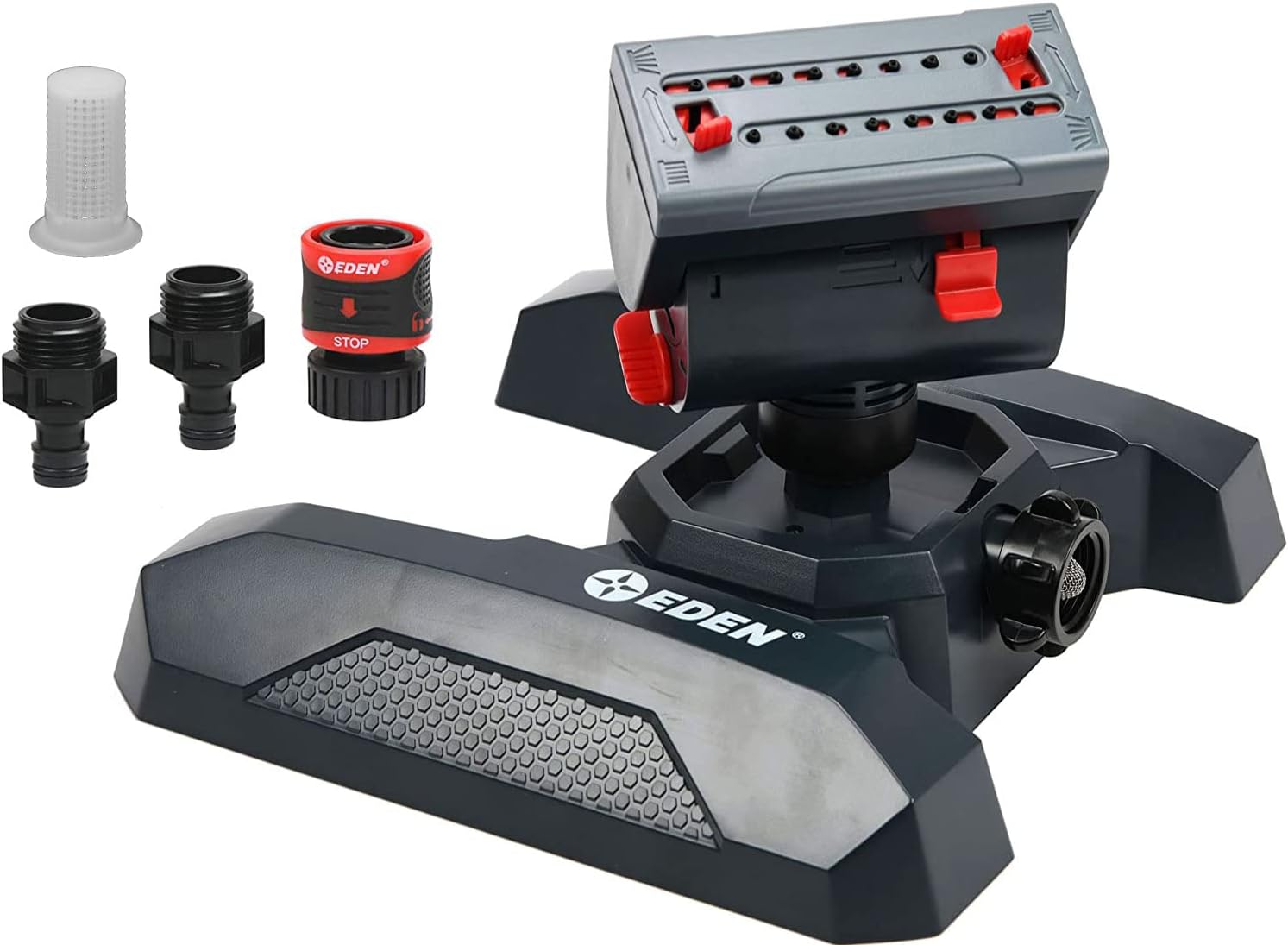
Eden 95124 Adjustable 4-Way Mini Turbo Oscillating Sprinkler W/Quick Connect Starter Set, Covers up to 4,069 sq. ft. Heavy Weight Base
Adjustable pattern, weighted base that stays put, quick connect saves threading
Needs real water pressure, and plastic left out over winter is a freeze-thaw risk
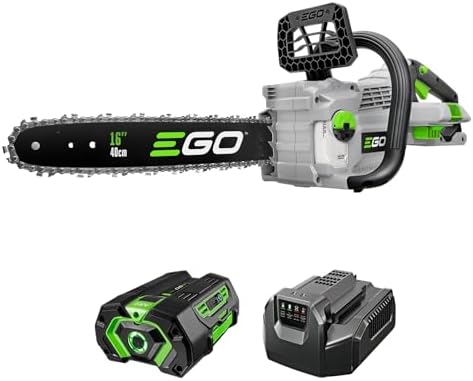
EGO POWER+ Chain Saw, 16” Battery Powered Chainsaw, Electric Cordless, Includes 56V 4.0Ah Battery and Charger, CS1613
No gas, no pull cord, battery and charger included in the box
A 16-inch bar is limb work, not a firewood operation
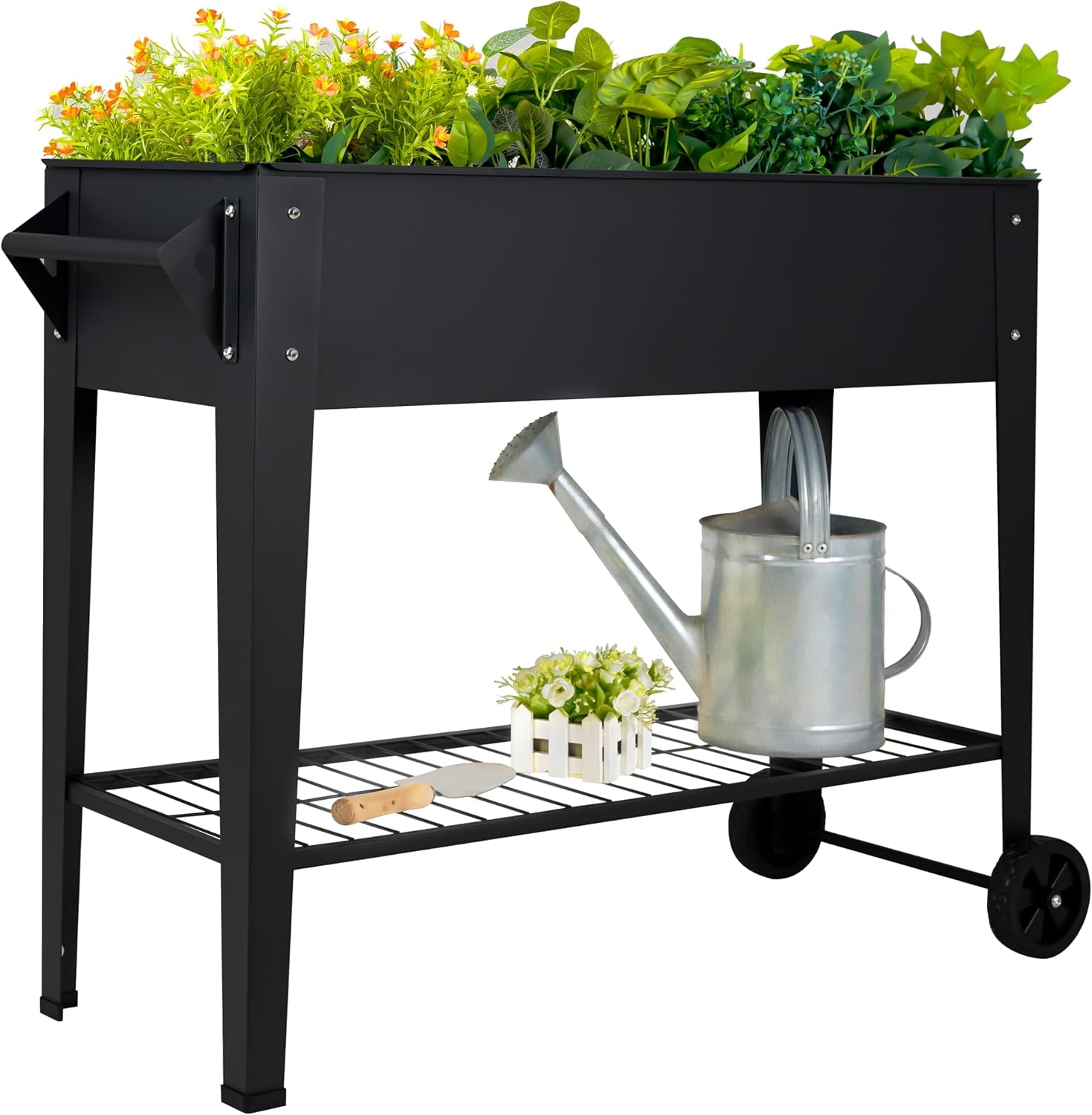
LEETOLLA Elevate 32" Raised Garden Bed with Wheels
Waist-height growing space that can be rolled out of the way
Raised soil dries faster, and wheels want a firm surface under them
Prices and availability were captured from Amazon Creators API and may change.
What the fall window actually asks for
Four jobs, four different failure modes. Seeding is a soil-contact problem. Watering is a pressure and pattern problem. Storm cleanup is a reach and control problem. Next season's planting is a soil-volume and access problem.
If you buy for the wrong failure mode, you waste the season. I have watched homeowners spend a hundred dollars on seed in May and wonder why nothing came up. Tall fescue germinates best when soil temperatures are falling, not rising, and the roots need six weeks of mild weather before the ground locks. Buy seed in spring and you are fighting the calendar. Buy it in September and the calendar is on your side.
How I judge gear before it earns a slot
My standard is a full growing season and a hundred logged hours before a tool gets a recommendation, with caliper checks every twenty-five hours and a dated entry in the Dirt Ledger. I am not going to pretend these four items have all cleared that bar. What I can tell you is the checklist they would have to pass, and it is the same checklist I use on everything.
For anything with a handle or a head, I want to know about the tang and the ferrule before I look at the paint. For anything with an edge, I want a steel hardness number, because a spec sheet that says "duty grade" and refuses to print a Rockwell figure is telling you something. For anything that lives outside, I want to know what one freeze-thaw cycle does to the plastic, the fittings, and the hardware. And for everything, I want the price-per-season math, because a cheap tool that survives a full year beats an expensive one that quits in August.
That lens does not fit a bag of grass seed. It does fit the other three.
Scotts Turf Builder Rapid Grass Tall Fescue Mix: the seeding job
Tall fescue is the grass that survives here. It sends roots deep enough to find moisture in July, it handles our clay better than bluegrass, and it stays green into November when the neighbors' lawns have gone straw-colored. The 5.6-pound bag is sized for patching and overseeding rather than a full acre, which is exactly what most yards need after a summer of drought stress and dog traffic.
The thing that decides whether this works is not the bag. It is what you do in the hour before you open it. Seed sitting on top of thatch germinates poorly. Seed pressed into loose, scratched soil germinates well. If your soil is compacted, rent a core aerator or go at the bare spots with a hard rake first, because no seed mix on the market can germinate through a crust. You do not have a grass seed problem, you have a compaction problem, and I have said that to more homeowners than I can count.
Then comes water. New tall fescue wants the top inch of soil consistently moist for the first three to four weeks, which in a dry October means a daily commitment. This is the part people skip, and it is the reason a bag of good seed fails.
Eden 95124 Mini Turbo Oscillating Sprinkler: the watering job
If you are watering new seed by hand, you will quit by day nine. The Eden 95124 is a mini turbo oscillating head with an adjustable four-way pattern, listed as covering up to 4,069 square feet, and it ships with a quick connect starter set. Three details matter more than the coverage number.
First, the pattern is adjustable, so you can aim water at a rectangle instead of soaking the driveway. Second, the heavy base. A sprinkler that walks across the lawn under its own pressure waters a stripe and leaves the rest dry, and a weighted base is the cheapest fix for that. Third, the quick connect. Threading a hose onto a sprinkler every evening sounds trivial until you have done it thirty nights in a row in the dark.
The honest downsides: oscillating sprinklers are pressure-dependent, so the coverage number assumes a decent spigot and a hose without kinks, and the plastic body is the part that suffers if you leave it outside through a freeze. Drain it and bring it in. That single habit is the difference between three seasons and one.
EGO POWER+ 16-Inch Chain Saw: the cleanup job
The EGO POWER+ CS1613 is a cordless 16-inch chainsaw on the 56V platform, and it arrives with a 4.0Ah battery and charger included. That last part matters more than the bar length. A bare tool is cheap until you price the battery, and this one does not make you buy into the platform twice.
For fall work, the case for battery is straightforward. No mixing fuel, no pull cord, no exhaust, and it starts in the cold. Limbs that came down in a storm get bucked up in the time it takes to drag an extension cord across the yard and give up on it. The 16-inch bar handles branches and small trunks comfortably. It is not the tool for dropping a mature oak or cutting three cords of firewood, and anyone who tells you otherwise is selling something.
Two maintenance habits decide how long this lasts. Keep the chain tensioned to spec and keep bar oil in the reservoir. A chain run loose overheats the bar and stretches, and a dry bar is scrap metal. Also expect battery run time to shorten in cold weather, which is normal chemistry, not a defect. Charge indoors the night before you work.
LEETOLLA Elevate 32-Inch Raised Garden Bed with Wheels: the next-season job
The LEETOLLA Elevate is a 32-inch raised bed on wheels, which puts the soil surface near waist height and lets you move the whole planting box instead of rebuilding it. Two problems solved at once: your back, and the fact that the sunniest spot in the yard in April is not always the sunniest spot in September.
Thirty-two inches of working height is the number I care about most. It is tall enough to plant, weed, and harvest without bending, which is why this style of bed shows up in so many accessible gardens. The wheels add a second kind of value: roll it onto a patio for the season, roll it into the garage before the freeze, and the soil mass stops being a permanent commitment.
What you give up is water. A raised bed drains faster than ground soil, and one that sits above grade with air moving under it dries faster still. Plan on more frequent watering, and mulch the surface. The wheels also want a firm surface. On soft ground they will sink, so keep it on gravel, patio, or a plank path. And check the hardware at the end of the season, because bolts and casters are what a freeze-thaw winter goes after first.
The trade-offs nobody puts on the box
Every one of these four takes something from you in exchange.
The seed is the cheapest per square foot and the most demanding in attention. It costs you twenty minutes a day for a month.
The sprinkler is the multiplier. Without it, the seed is a gamble. With it, you have committed to moving a hose around the yard on a schedule, and you have to store it dry through winter.
The chainsaw is the biggest single outlay and the most specialized. If you do not have limbs down or trees to prune, it is a tool that sits. If you do, it replaces an hour of hand-sawing with five minutes and a sore forearm.
The raised bed is a capital item with a soil bill attached. The frame is the cheap part. Filling 32 inches of depth takes real volume, and that is where the budget goes.
Which one should you buy first?
If your lawn is thin and patchy, buy the seed, then buy the sprinkler the same week. Those two are a system, and buying one without the other wastes both.
If you have storm damage sitting on your beds right now, buy the chainsaw. Cleanup is the job that will not wait for spring, and a 16-inch cordless saw with the battery included is the least intimidating way into that work.
If bending over is the reason your garden shrunk this year, buy the raised bed. Height is not a luxury feature for everyone, and wheels mean you are not committing to a location you might regret.
If you can only justify one purchase this fall and your lawn is already thick, skip all four and spend the money on a soil test. I mean that. The report will tell you more about next season than any tool on this list.
The bottom line before the freeze
Fall is the season when good decisions compound and bad ones get punished by the calendar. Seed planted in September has six weeks to root. Seed planted in October has two, and you will see the difference next July. Watering gear bought in September saves the seed. Watering gear bought in October arrives after the damage.
The one thing I would not do is buy all four at once and let three of them sit. Match the purchase to the job in front of you, run it hard, and judge it at the end of the season the way I do: by whether it still does what it did on day one. That is the only review that counts, and it is the one you can write yourself.