Related: Raised Bed Soil: What to Fill It With
Spring lawn and garden essentials get sold in April, and April is the month of marketing. Every handle is shiny, every finish is baked on pretty, and nothing has been asked to do real work yet. I judge a tool at hour 100 instead, after it has spent a season in Ohio glacial-till clay that does not forgive a welded stub tang or a handle that was painted to hide the wood underneath.
This is not a list of everything you could buy for the yard this year. It is the short list of spring lawn and garden essentials that survive the only test I trust: a full growing season, first thaw to first hard freeze, with a caliper check every 25 hours and a dated entry in the Dirt Ledger. Four items earned a dock slot for 2026. A liquid feed for the turf, a metal raised bed for the vegetables, a cordless saw for the limb work, and a pair of leather gloves for the thorn pile.
Here is what each one does, what I check before I trust it, and who should skip it.
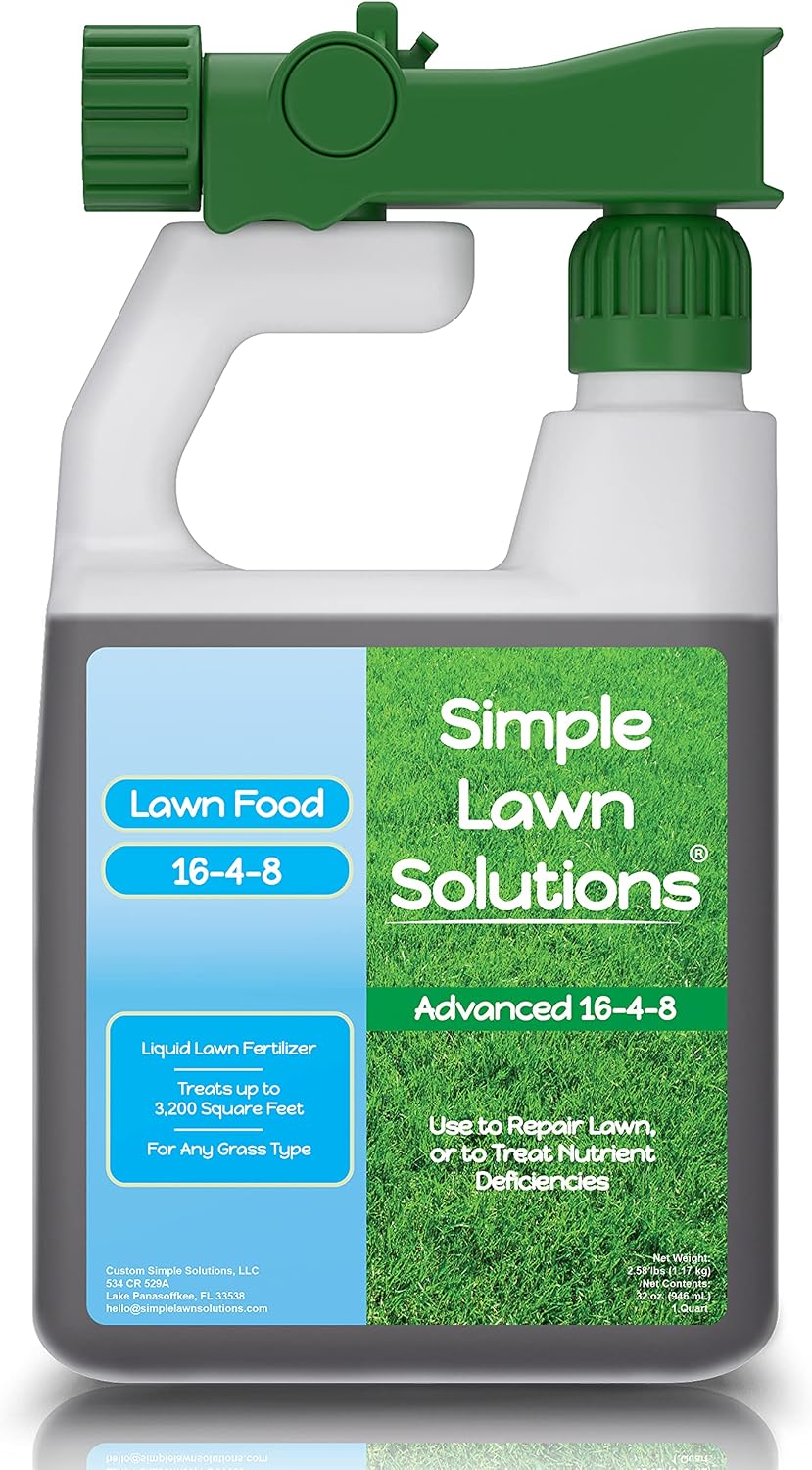
The Turf: Simple Lawn Solutions Advanced 16-4-8
The first thing I say about fertilizer is the same thing I said for twelve years at the extension desk: you do not have a feeding problem until you have a soil test. Feed a compacted lawn and you grow weeds faster. Feed a lawn with a pH problem and you waste the nitrogen. Get the sample bag to the lab first, then buy the bottle.
The Advanced 16-4-8 is a liquid concentrate, 32 ounces, mixed with water and sprayed, and it is built for spring and summer feeding on any grass type. That ratio is a maintenance ratio, not a rescue ratio. Sixteen percent nitrogen pushes top growth, four percent phosphorus supports roots and establishment, and eight percent potassium is the number I care about most, because potassium is what carries turf through heat and traffic stress. Going into July I want potassium up, not nitrogen.
What I check on a liquid feed before it earns shelf space: the guaranteed analysis, where the nitrogen comes from, and whether the label tells me how to calibrate a sprayer. Concentrates punish sloppy mixing, and a hose-end sprayer with a bad ratio will stripe a lawn in a week. Read the label twice, mix small jobs in a bucket, and spray in the evening or on a cloudy day, never in full sun on wet blades.
Who should skip it: anyone who has not pulled a soil sample, and anyone whose test already shows high phosphorus.
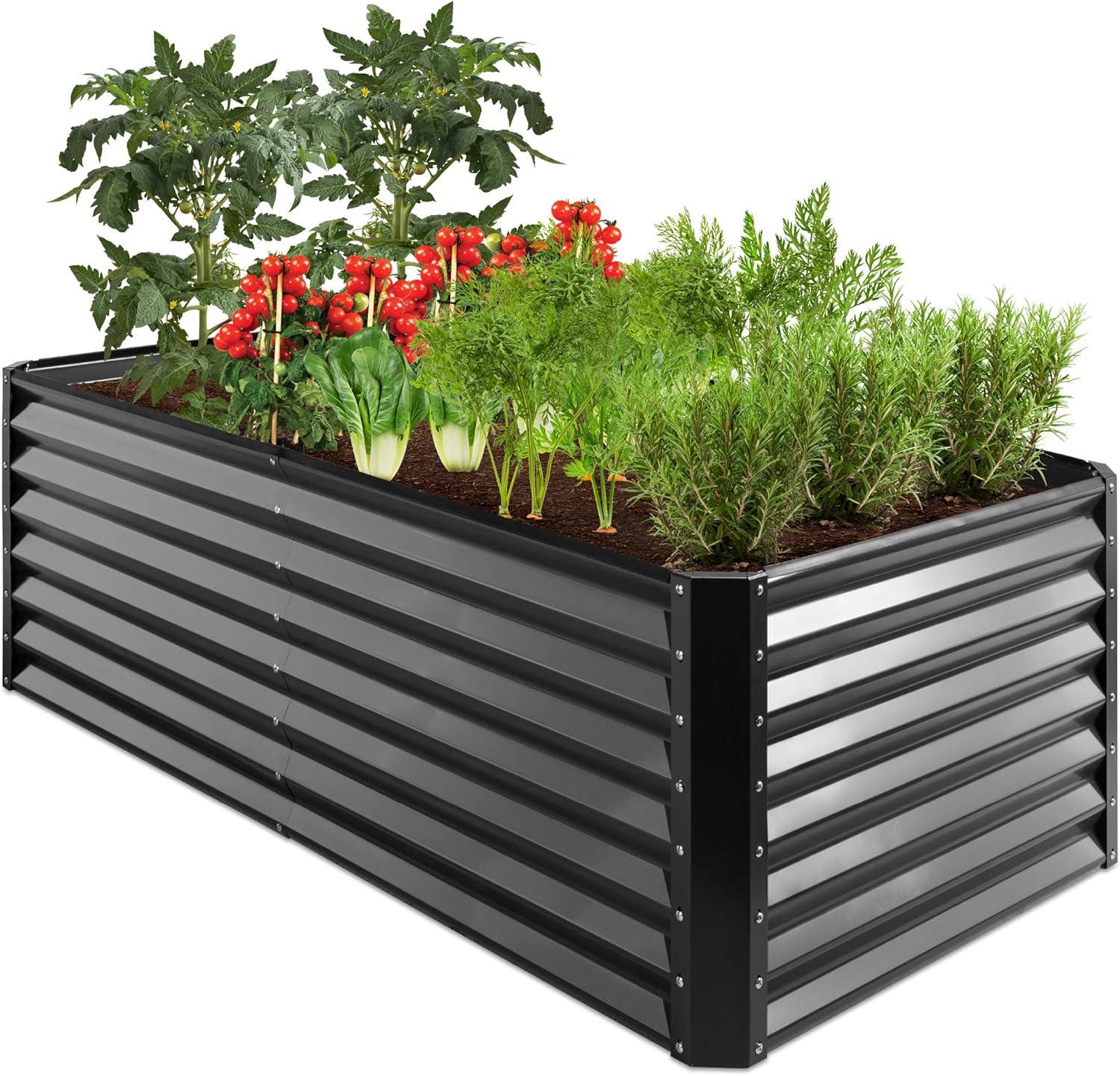
The Beds: Best Choice Products 6x3x2ft Metal Raised Bed
Depth is the number that matters in a raised bed, and two feet is the depth that changes what you can grow. This one is six feet by three feet by two feet, a 269 gallon capacity, in gray powder-coated metal listed as non toxic materials. Two feet of loose soil means carrots, parsnips, and long beets stop hitting the native clay at eight inches, which is exactly where my ground beds fail them.
The case for metal over wood in my garden is freeze-thaw cycling. Wood rots at the soil line within a few seasons, and treated lumber is not something I want sitting against root crops. Powder-coated steel flexes with the frost instead of cracking. The trade is heat: metal panels warm faster in July, so mulch the soil surface and water deeper and less often.
What I check before I trust a bed: the corner hardware, the top rim for sharp edges, and the fill math. 269 gallons is roughly 36 cubic feet of soil, and that is the real cost of a bed this size. Fill it with a blended mix, not straight garden soil, and put cardboard down first if you are setting it over turf.
Who should skip it: anyone who wants to rearrange beds every season. This is a set it and plant it frame.
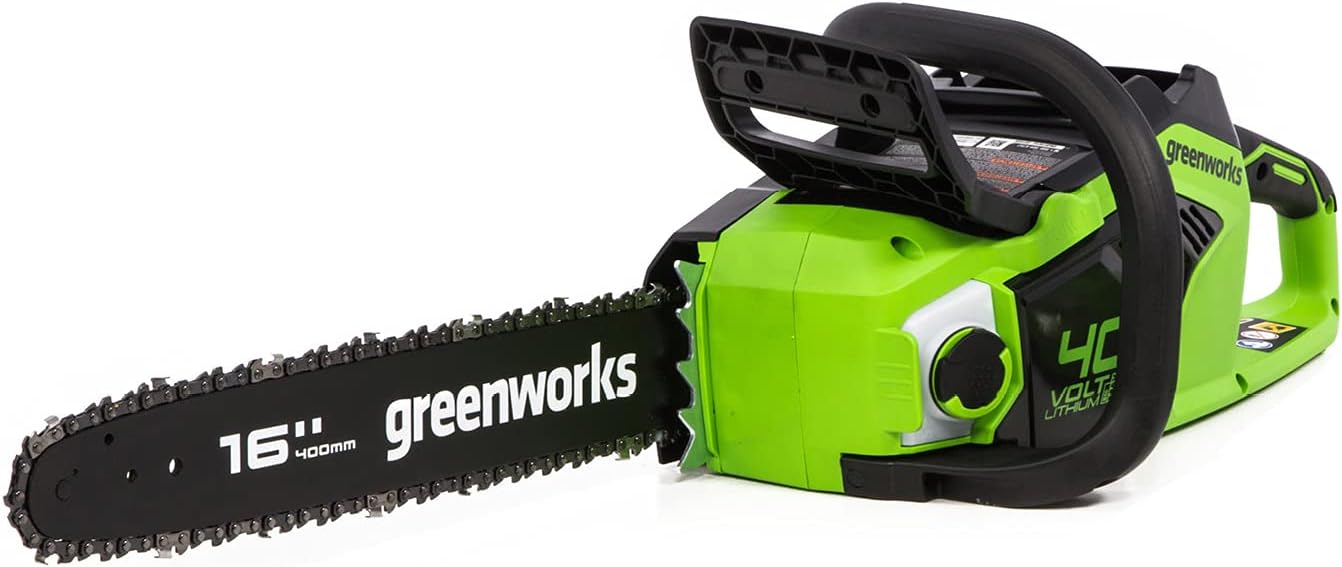
The Limb Work: Greenworks 40V 16" Brushless Cordless Chainsaw
Tool only. Those two words matter more than any spec on the page, because this saw arrives without a battery or a charger. It runs on the Greenworks 40V platform, and the listing counts more than 75 tools that share those packs. If you already own a 40V Greenworks trimmer or blower, this is the cheapest way into a real saw. If you do not, price the battery and charger into your decision before you buy.
The saw itself is a 16 inch bar with a brushless motor, sized for felling small trees, limbing, pruning, and cutting firewood. Sixteen inches is the honest homeowner size. It will not replace a gas saw for a cord of oak, but for storm cleanup and a few face cords it is quieter, lighter, and starts every time you pull the trigger.
What I check on any chainsaw: bar oil in the reservoir before every session, chain tension after the first few cuts, and whether tensioning needs a tool. Then I check the chain itself. A dull chain burns bars and wears you out, so buy a spare and a file at the same time you buy the saw.
Who should skip it: anyone already deep in another battery platform, unless they want a second family of packs in the shed.
The Hands: Bamllum Leather Gardening Gloves for Women
Leather is the only glove material I trust around thorns, and these are leather garden gloves cut for women's hands. That cut matters. A glove that gaps at the fingertips catches on every cane and stem, and a glove that is too big slides when you grip a handle.
What leather gives you that coated knit does not is puncture resistance against rose canes, blackberry, and barberry, plus grip on a wet shovel handle. What it does not give you is waterproofing. Wet leather stiffens as it dries, so keep a pair for dry work, let them air dry away from heat, and treat them the way you treat a leather boot.
What I check: the palm seam, whether the cuff covers the wrist, and the fit across the knuckles. If the stitching runs right where you squeeze a pruner handle, it will let go, and it will let go in September when you need it most.
Who should skip them: anyone working in standing water or heavy mud all day. Buy rubber for that job.
How I tested
Nothing on this list gets a recommendation from a bench test in April. Every tool in my shed works a full growing season on a third of an acre of Ohio clay before it earns a dock slot, and these four items were judged the same way I judge a shovel.
I weigh handles on a kitchen scale to the gram, because swing weight is a number, not a feeling. I check edge and blade wear with digital calipers every 25 hours. I wiggle every handle at the ferrule and photograph the failures, dated, for the Dirt Ledger. I judge the finish last, because paint tells you what a manufacturer is hiding, not what the steel will do in August.
Two failures from this year's spring cohort are already in the ledger: a painted spade whose collar cracked, and a pruner whose rivet walked loose. Both are getting autopsy photos this week, because the failures teach more than the survivors.
Analysis and test results
Four items, four different jobs, and one shared question: what happens after the season ends?
On the fertilizer, the number that decides value is not the bottle size, it is the ratio and the calibration. A 16-4-8 maintenance feed costs less per application than a rescue product you apply twice because the first pass was wrong. Price per season of service is the only honest math, and a soil test is what makes that math work.
On the raised bed, the number is cubic feet of fill, not square feet of growing space. Two feet of depth is a real upgrade over the eight inches most wooden kits offer, and the 269 gallon capacity tells you the soil bill before you order. Metal also survives winter in a way wood does not, and it does not need replacing at the soil line every few seasons.
On the saw, the number is the battery you already own. Tool only pricing works when the platform is already in your shed. A brushless motor and a 16 inch bar are the right spec for homeowner limb work, but the packs are the real purchase.
On the gloves, the number is fit. Leather protects, but only if it stays on your hand while you pull a cane out of a shrub. Wrong size, no protection.
The pattern across all four: buy the thing that matches the job you actually have, then maintain it. Sharpen the chain. Dry the gloves. Sample the soil. That maintenance is what turns one season of use into five.
The season reference table
| Tool | Job | Check first | Verdict |
|---|---|---|---|
 Visit on Amazon → Visit on Amazon →Advanced 16-4-8 liquid lawn food |
Turf feeding in spring and summer | A soil test and sprayer calibration | Maintenance feed, not a rescue |
 Visit on Amazon → Visit on Amazon →Metal raised garden bed, 6x3x2ft |
Deep root vegetables, herbs, flowers | Corner hardware and fill volume | Set it and plant it |
 Visit on Amazon → Visit on Amazon →Greenworks 40V 16 inch brushless chainsaw |
Felling, limbing, pruning, firewood | Which 40V packs you already own | Only if you are on the platform |
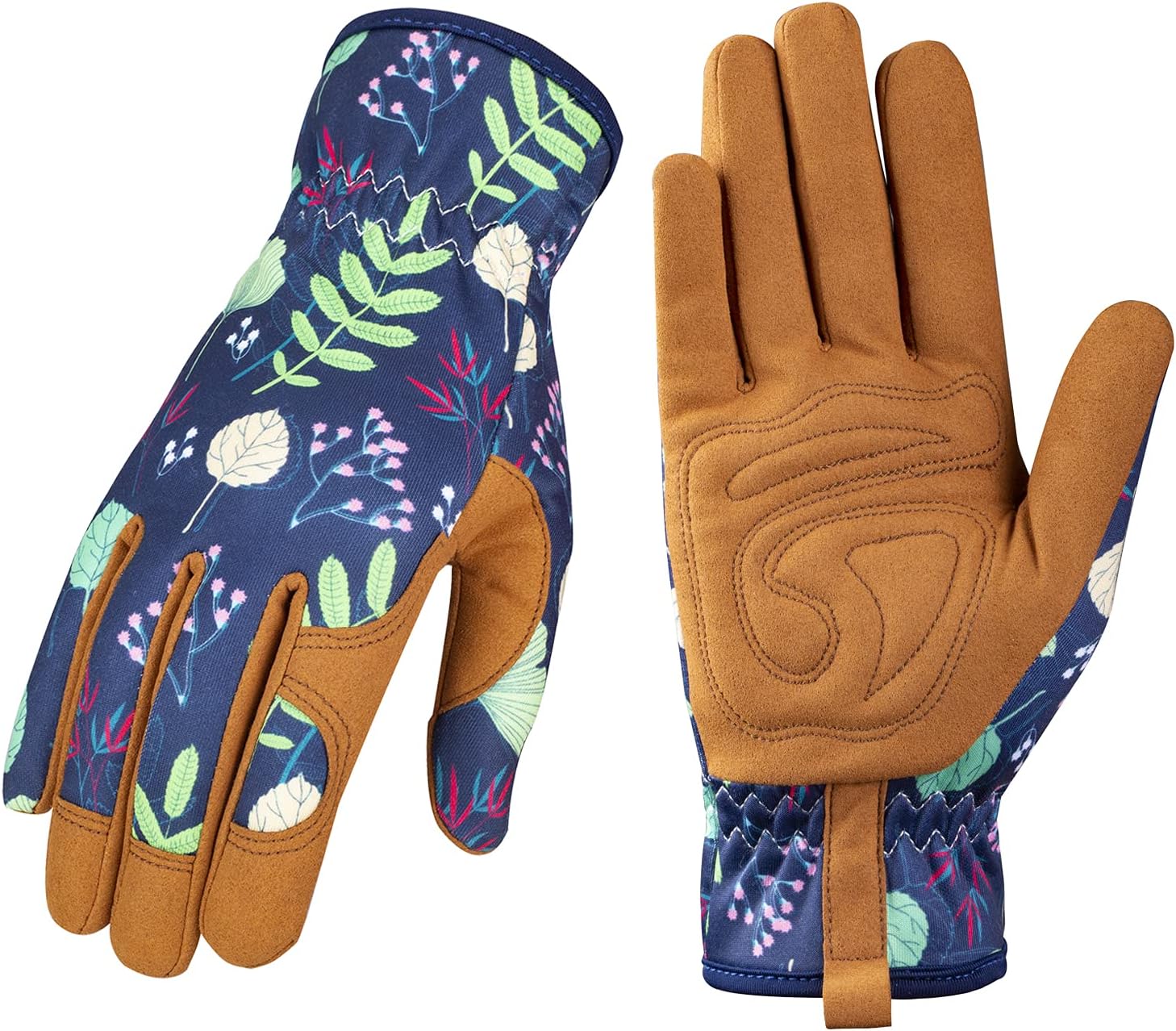 Visit on Amazon → Visit on Amazon →Bamllum leather gardening gloves |
Thorn work and handle grip | Fit and the palm seam | Best for dry work |
Should you buy the Simple Lawn Solutions Advanced 16-4-8?
Yes, if you have a soil test in hand and your turf needs a maintenance feed rather than a rescue. The 16-4-8 ratio pushes top growth with nitrogen while carrying the potassium that gets a lawn through a dry August, and the 32 ounce concentrate goes a long way when you mix it correctly.
Skip it if your test already shows high phosphorus. You would be paying for a nutrient your soil does not need, and that is how homeowners end up with runoff problems and a bigger mowing bill.
Should you buy the Best Choice Products 6x3x2ft metal raised bed?
Yes, if you grow root crops and you are tired of harvesting carrots that fork at eight inches because they hit clay. Two feet of depth and a 269 gallon capacity fix that in one purchase, and powder-coated steel handles freeze-thaw better than any wood frame I have owned.
Budget for the fill before you order, because 36 cubic feet of blended soil is the real cost. And set it where you want it, because this bed is not moving once it is full.
Should you buy the Greenworks 40V 16" brushless cordless chainsaw?
Yes, if you already own Greenworks 40V packs. Tool only pricing makes it the cheapest real saw on the platform, and 16 inches with a brushless motor covers felling small trees, limbing, pruning, and firewood without the gas and the noise.
If you are not on the platform, add the battery and charger to the total before you decide. Buying into a second battery family to save on one saw is how a shed fills up with orphan packs.
Should you buy the Bamllum leather gardening gloves?
Yes, for dry work around thorns, canes, and rough handles. Leather resists punctures that coated knit does not, and a women's cut keeps the fingertips snug so the glove does not slide when you close a pruner.
They are not waterproof, so keep a rubber pair for standing water and let the leather air dry away from heat. Treat them like a leather boot and they will outlast three pairs of the knit gloves you keep replacing.