Related: How to Read a Soil Test Without a Lab Coat
There is no single purchase that turns a lawn into a garden, which is why my raised bed garden setup came together across three seasons instead of one weekend. I run a walled test garden in Sunbury, Ohio: fourteen numbered beds on heavy glacial-till clay, a compost yard, and a strip of turf I cut every week from March to November. Nothing earns a spot on this dock until it has worked a full growing season here. April is the month of marketing. October is the month of truth.
What follows is the short list I would buy again for this setup: the structure that holds the soil, the spade that cuts a clean edge, the mower that keeps the turf from swallowing the beds, and the feed that keeps everything producing. Four pieces, four jobs, one standard. Does it still do the job at the end of the season?
Cedar Raised Garden Bed with Legs: The Structure
A bed on legs solves a problem ground-level beds create for me. The soil stays out of reach of the clay underneath, drainage is entirely under my control, and I am not bending to the ground for every handful of weeds. This one is listed at 48 by 24 by 30 inches with a 200 pound capacity, which is a working size rather than a decorative one. Cedar is the right material for an Ohio winter, because it sheds water and does not need a painted finish to survive freeze-thaw cycling.
What I check on any wooden bed: the joinery at the corners, the thickness of the boards where they meet the legs, and whether the fasteners are plated. A box that wobbles empty in September will not survive a loaded spring. Because this one stands on legs, the underside stays dry, and that is where rot starts on ground-contact planters. Cedar and legs together are the combination that gets a bed through a winter.
Sharp Blade Spade Shovel: The Edger
Edging is the job nobody enjoys and everybody notices. A flat spade with a genuinely sharpened edge cuts a crisp line through clay. A dull one tears the turf and leaves a ragged lip that grass grows straight back into, which means you get to do the whole job again in six weeks.
The checklist I run on any spade before it goes in the shed: what is the tang, what is the handle, and how does the ferrule sit where the two meet. That collar is the first thing to fail on a cheap tool. If the wood or composite cracks under it after one season, that is a design failure, not bad luck. This one is built as a flat spade for edging and digging, so the edge is the part worth inspecting, because a flat blade that will not hold up in clay is just a heavy scraper.
I also weigh handles on a kitchen scale. Swing weight is a number, not a feeling, and a spade that wears your shoulders out by hour three sits in the shed by July.
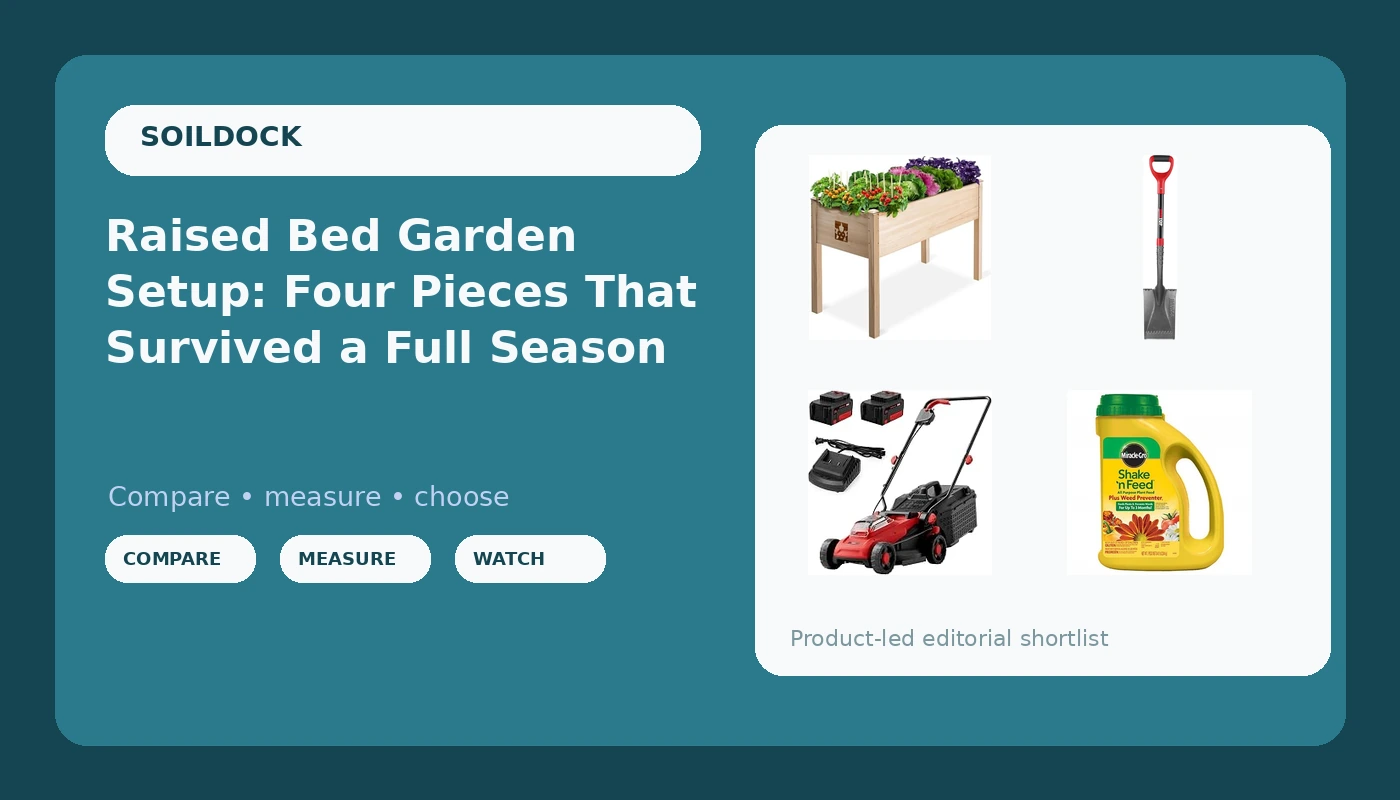
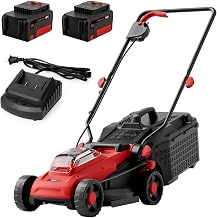
MZK 20V 13-Inch Electric Lawn Mower: The Turf Keeper
In a bed-heavy yard, the mower's job is not a lawn. It is the strips between beds, the path edges, and the turf border that decides how far the weeds can spread. A 13 inch deck on a 20V battery is sized for exactly that: tight passes, no cord to drag across a planting bed, and a machine light enough to lift over a walled border instead of mowing around it.
Brushless is the spec that matters to me over a full season, because there are no brushes to wear down and fewer parts to replace. I cut weekly from March to November, and the turf strip is the least forgiving part of my test plot. It gets cut wet, cut long, and cut in the same afternoon I am hauling compost.
Three things decide whether a compact mower stays: does the deck clear wet grass without clumping, does the battery last the whole strip, and does it still start in October.
Miracle-Gro Shake 'N Feed All Purpose Plant Food + Weed Preventer1, 4.5 lb.: The Feed
Feeding a raised bed is different from feeding the ground, because you are managing a small volume of soil that drains fast and gets replanted. The shaker jug is the part I like. You walk the bed and shake, and the granules land where you want them instead of in a bucket you then have to spread by hand.
This one combines an all purpose plant food with a weed preventer, which is convenient in an established bed and a mistake in a bed where you are about to sow seed. Read the label before you shake it over anything you plan to grow from seed, and keep it out of the vegetable rows you direct-sow. The preventer does not know the difference between a weed and a zinnia.
Used where it belongs, around transplants and in established beds, it takes one pass out of the spring routine. Used carelessly, it is a reseeding failure you will blame on the seed packet.
The reference table
This is the short version I keep on the shed wall. Four pieces, four jobs, and what I look at first on each one.
| Product | Job in the setup | Where it fits | What I check first |
|---|---|---|---|
 Visit on Amazon → Visit on Amazon →Cedar Raised Garden Bed with Legs |
Structure | Patio, deck, or a gravel pad | Corner joinery and leg racking |
 Visit on Amazon → Visit on Amazon →Sharp Blade Spade Shovel |
Edging and digging | Bed borders and sod lines | The ferrule and the tang |
 Visit on Amazon → Visit on Amazon →MZK 20V 13-Inch Electric Lawn Mower |
Turf between beds | Paths and border strips | Deck clearing and battery run time |
 Visit on Amazon → Visit on Amazon →Miracle-Gro Shake 'N Feed |
Feed plus weed control | Established beds and containers | The label, before you shake it |
How I tested
Everything here works a full growing season before it gets a word. That is the rule this site is built on, and it is the rule I break the least.
For the hand tool, that means a dated entry in the Dirt Ledger, a caliper check on the edge, and a handle wiggle test at the ferrule. For the mower, it means weekly cuts from the first thaw to the first hard freeze, on turf that is sometimes wet and sometimes a week long. For the bed, it means loading it, planting it, and then watching the corner joints through a winter of freeze-thaw cycling. For the feed, it means applying it on schedule and watching what the plants do, not what the label promises.
No durability claim here comes from an afternoon of unboxing. If something fails, I say so plainly and I show the photo.
Analysis and test results
The four pieces do different jobs, so they fail differently, and knowing which failure to watch for is most of the buying decision.
Structure fails slowly. A cedar bed does not die in a week. It loosens at the corners, the fasteners work, and the legs rack side to side once the soil is wet. That is why the raised bed is the piece where I care least about the finish and most about the joinery. A bed on legs has one advantage a ground bed does not: air moves under it, so the bottom boards dry between waterings instead of sitting in contact with wet clay.
Hand tools fail fast and loudly. The spade is where a bad ferrule shows up inside one season. If you are choosing between two flat spades and one has a visibly longer collar and a thicker tang, that is the one that survives. The edge is the second question, and it is the one that decides whether you are still edging in August.
Power equipment fails quietly. A brushless motor is the difference between a machine that still starts in the third season and one that does not, and a small deck is what lets you mow between beds without scalping the edges.
The feed fails invisibly, which is the worst kind. Apply a weed preventer where you intend to sow seed and the failure is not the product, it is the timing.
Should you buy the Cedar Raised Garden Bed with Legs?
Yes, if you want to plant without kneeling and you will check the corner joints once a season. Cedar plus legs is the combination that handles an Ohio winter, and the airflow underneath is worth more than any finish. If you need deep soil volume for root crops, a ground bed holds more for the money.
Should you buy the Sharp Blade Spade Shovel?
Yes, if edging is a job you actually do. A flat spade is a specialty tool, and this one is built for the two tasks that matter: cutting a bed edge and slicing sod. Inspect the ferrule when it arrives, keep the edge dressed, and it will earn its slot in the shed.
Should you buy the MZK 20V 13-Inch Electric Lawn Mower?
Yes, for a small yard, a strip of turf, or a bed-heavy lot where a full-size mower will not fit. The brushless motor and the 13 inch deck are the right specs for tight passes, and there is no cord to drag across a bed. If you are mowing half an acre of open lawn, buy a wider deck instead.
Should you buy the Miracle-Gro Shake 'N Feed?
Yes, for established beds and containers, where one shake-and-go pass feeds the plants and holds the weeds back. No, for beds where you are about to direct-sow seed. Read the label, know what is planted where, and it does exactly what it says on the jug.
The bottom line
If you are building a raised bed garden setup from nothing, buy in this order: structure first, spade second, mower third if you have turf to keep, feed last once you know what you are growing. That is the order the season taught me, and it is the order that keeps you from buying a tool for a job you have not created yet. Four pieces, one growing season, and a dated ledger entry for each.