It is the second week of October in Sunbury, and the beds are nearly done for the year. This is the stretch when I stop watering and start deciding: what earned its spot, what gets repaired, and what gets carried to the curb. The four pieces in this guide cover the whole arc of a small yard. Call it a raised bed and lawn care tools set that handles soil prep, water, and turf in one pass, and understand up front that they are not equal. One is a digging tool built the way I want every spade built. One is a wooden frame that will change your soil more than any fertilizer will. One is a sprinkler that has to survive a winter in an unheated shed. One is a bagged lawn program that either fits your grass or wastes your fall.
If you buy only one thing from this list, buy the Fiskars 44 inch Pro Garden Shovel. Digging and turning soil is the job that breaks cheap tools first, and the Fiskars has the two features that matter most to me: a steel head with a sharpened edge and an aluminum D-handle that will not rot, crack, or swell under a ferrule. Everything else here is a scheduling decision. The shovel is a tool decision.

Fiskars 44" Pro Garden Shovel
Steel head with a factory sharpened edge, aluminum D-handle that ignores weather
44 inches is a lot of shaft if you are short, and the edge still needs a file once a season
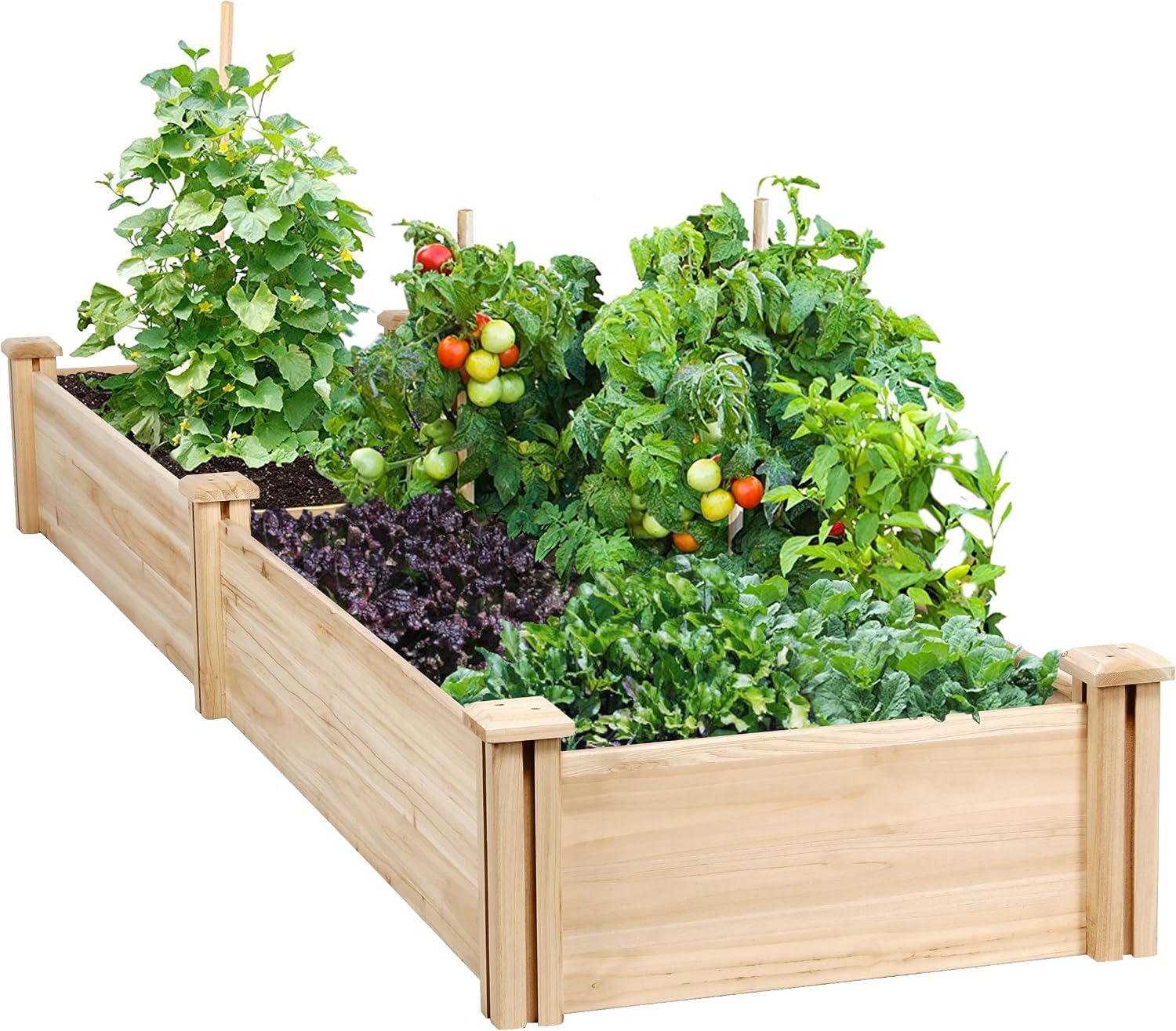
Yaheetech Raised Garden Bed Wooden Planter Box
Wood frame you can fill with soil you actually chose, instead of Ohio clay
Wood moves with freeze and thaw, so the corners need a fall tightening every year

Melnor 65118-AMZ XT Metal Turbo Oscillating Sprinkler
Metal housing, adjustable pattern, 4000 sq. ft. coverage, QuickConnect adapter included
Storage decides its life. Leave water in it over a hard freeze and no housing survives
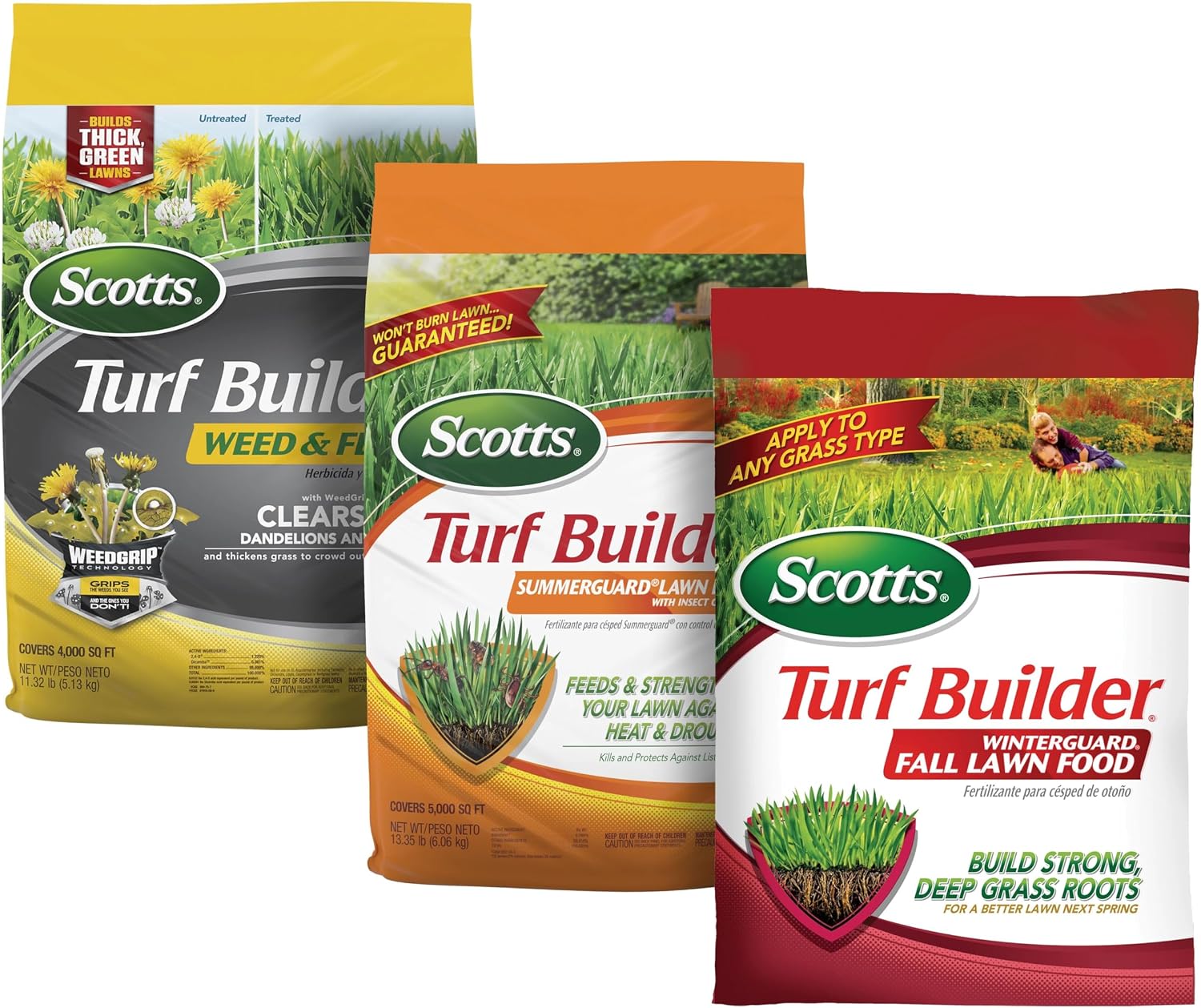
Scotts Turf Builder 3-Bag Lawn Care Bundle for Small, Northern Lawns
One box, one fall schedule, sized for a small northern lawn
A bundle is a schedule. If your soil test says pH or compaction, bags will not fix it
Prices and availability were captured from Amazon Creators API and may change.
How I judge these four before they earn a dock slot
Every tool that gets a permanent spot in my shed has to clear the same checklist, and it starts long before the hundred hour mark. First, the tang. On any digging tool, I want to know how much steel runs up into the handle, because a short welded stub is the reason a spade twists loose in August. Second, the ferrule, the collar where the handle meets the head. That is the first place a cheap tool fails, and if wood cracks under it after one season, that is a design failure, not bad luck. Third, handle material. I have watched too many painted wood handles hide soft grain underneath, and I have replaced a lot of them.
The fourth question is the steel itself. A spec sheet that says heavy duty without a hardness number is telling you something by omission. Digging tools live or die on whether the edge resharpens or shatters, and you only learn that in clay.
The other three products get a different test, because they are not cutting anything. Wood framing gets a moisture and movement test, since freeze-thaw cycling is what opens joints and racks corners. Anything with a plastic or metal housing gets a storage test, which sounds trivial and is not. And a bagged lawn program gets the only test that matters at the extension desk: does it match your soil test and your grass species, or are you buying a schedule that does not fit your yard.
The Fiskars 44 inch Pro Garden Shovel: the piece that does the work
This is the one item on the list I would hand to someone who has never gardened and tell them to keep it for twenty years. The head is heavy gauge steel with a sharpened edge out of the box, which matters more than most buyers realize. A dull spade does not dig, it compresses, and compressed clay is worse than untouched clay. The 44 inch shaft gives you leverage, and the aluminum D-handle is the part I care about most. Aluminum does not absorb water, does not swell, and does not crack under the ferrule the way painted wood does.
Two things to check when it arrives. First, grip the head and try to twist it against the handle. There should be no movement at all. If there is, return it before you dig, because that play only grows. Second, look at the edge and decide now how you will maintain it. I keep a mill file in the shed and give a working spade a few passes in spring and again in fall. A sharpened edge that you never touch is a sharpened edge for about six weeks.
The honest drawback is length. Forty-four inches is a genuine advantage if you are tall or if your back has opinions, and it is awkward if you are not. If you are under about five foot four, that extra shaft changes the swing weight enough that you will feel it in your shoulders by the third hour of bed prep. There is no universal answer here, there is only your height and your soil.
Visit on Amazon: Fiskars 44" Pro Garden Shovel
The Yaheetech Raised Garden Bed: buying your way out of bad soil
Here is the truth that twelve years at the soil-testing desk taught me: most people who think they have a plant problem have a soil problem, and the fastest fix for bad ground is to stop planting in it. A raised bed lets you fill a box with a mix you chose, at a depth you chose, and skip the glacial till entirely. The Yaheetech wooden planter box is that box. For vegetables and flowers, the depth is what matters, and deeper is almost always better. Shallow beds grow lettuce and herbs. Deep beds grow carrots, tomatoes, and anything with a taproot.
What you should check before you fill it is the joinery and the hardware. Wood moves through a winter. Water gets into end grain, freezes, expands, and pushes joints apart. That is not a defect in this bed or any wooden bed, it is physics, and the answer is a fall pass with a screwdriver and a wrench to snug everything before the ground locks. Do that in October and you will not be rebuilding a corner in April.
Placement is the other thing people get wrong. A raised bed on uneven ground will rack out of square once it is full of wet soil, which is heavy. Set it on level ground, or dig it in at the high corner. And if you are growing food, know what the wood is before you trust it. My rule is simple: if a manufacturer spent more on the finish than on the material underneath, I want to see what is under the finish.
Visit on Amazon: Yaheetech Raised Garden Bed Wooden Planter Box
The Melnor XT Turbo Oscillating Sprinkler: coverage math and winter storage
The Melnor 65118-AMZ XT is a metal turbo oscillating sprinkler rated for 4,000 square feet, and it ships with a QuickConnect product adapter in the bundle. Two of those details matter more than the coverage number. The metal housing is the durability story. I have watched plastic sprinkler bodies come out of a shed in March with a hairline crack that turns into a geyser the first time you pressurize them, and one hard freeze with water still inside is usually all it takes.
The coverage rating is the detail I would think hardest about. Four thousand square feet is a rectangle roughly 60 by 65 feet. Most small yards are a fraction of that, so what you are really buying is an adjustable pattern and a turbo mechanism that throws water evenly across whatever you actually have. Set the range to your lawn, not to the brochure. Measure your lawn first: length times width, minus the beds, minus the driveway. That number is the only one that tells you whether you are watering your grass or your sidewalk.
QuickConnect is a small convenience that earns its keep once you own more than one hose attachment, since you stop threading and unthreading fittings with wet hands. Check that the adapter mates with your existing fittings before you commit, and buy a spare if you run multiple hoses.
The thing I would tell any homeowner about this sprinkler is a pressure note. Oscillating sprinklers want consistent pressure, and a hundred foot hose run at the end of the day drops it enough to change the pattern. Water in the morning, water deep and infrequent, and drain the housing completely before the first hard freeze. That last step is the entire difference between a sprinkler that lasts five seasons and one that lasts one.
Visit on Amazon: Melnor 65118-AMZ XT Metal Turbo Oscillating Sprinkler
The Scotts Turf Builder bundle: a schedule, not a miracle
The Scotts Turf Builder 3-Bag Lawn Care Bundle is sized for a small northern lawn, which is exactly the yard most people in Ohio and the upper Midwest are standing on. Cool-season grasses, the tall fescues, the Kentucky bluegrasses, the perennial ryegrasses, do their best growing in spring and fall, which is why fall feeding and fall overseeding work when summer feeding mostly feeds the crabgrass. If your lawn is thin and you are reading this in early October, you are in the right window, and a three bag program in one box is a reasonable way to stop guessing about order and timing.
But I have to say the extension desk thing, because I said it for twelve years and it is still true. You do not have a grass seed problem, you have a compaction problem, or a pH problem, or a shade problem. A soil test costs less than this bundle and it tells you whether the bags are the right answer. If your pH is off, no fertilizer program fixes it. If your soil is compacted from years of mowing the same path, no fertilizer program fixes that either. Bags are the last step, not the first.
The other honest caveat is math. A bundle is a schedule, and a schedule assumes your square footage and your grass type fit the label. Measure your lawn, check the label coverage, and confirm the timing matches your fall. If it does, buying the program in one box is simpler than chasing three products separately. If it does not, you are buying convenience you cannot use.
Visit on Amazon: Scotts Turf Builder 3-Bag Lawn Care Bundle
The trade-offs nobody puts in the bullet points
The first trade-off is price per season of service. That is the only honest number in gardening, and it is the reason I will pay more for an aluminum D-handle and refuse to pay more for a painted one. A tool that costs twice as much and lasts four times as long is the cheaper tool, and a tool that dies in August cost you a whole season no matter what you paid in April. When you compare these four, run that math on each one.
The second is storage. Two of these products are weather and winter questions in disguise. The sprinkler has to be drained and stored dry, and the raised bed has to be checked for loose hardware before the ground freezes. Neither of those tasks is optional, and neither takes an hour. Tools that die in storage over winter are the quietest losses in a garden shed, and they are almost entirely preventable.
The third is that a bundle is not a tool. The Fiskars spade and the Yaheetech bed will still be doing their jobs in a decade, and the sprinkler will be doing its job as long as you store it properly. The lawn bundle is consumed, by design, and then it is gone. That is not a criticism, it is just a difference in what you are buying, and it should shape how much you spend.
What I would do first, and what I would wait on
If you are starting from bare ground, fix the soil and the water first. The raised bed gives you soil you control, and the sprinkler gives you water you can measure. Those two pieces do more for a first-year garden than any input you can pour on the ground, because they change the growing conditions rather than patching the symptoms.
Buy the Fiskars shovel whenever you are tired of borrowing one, and buy it once. It is the tool on this list that I would rank as the longest service life per dollar, and the one whose failure modes I can predict most clearly: a dull edge and a loose collar, both of which you can catch early.
Treat the lawn bundle as the last purchase, after a soil test and after you have measured your square footage. If the program fits, it saves you a fall of guesswork. If it does not, you just saved the price of three bags and spent it on the thing that was actually wrong.
That is the whole October decision. The beds go to sleep, the sprinkler goes into the shed dry, the hardware gets one last snug, and the blade gets a file pass before the first hard freeze. Everything else is marketing.