Related: How to Read a Soil Test Before You Buy a Single Tool
It is the second week of September in Sunbury, and the beds have started voting. The tomatoes are done, the kale is sulking, and I am walking the rows with a caliper in my pocket and a notebook in my hand, because September is the month when garden gear either proves itself or confesses. A raised garden bed and pruning shears are the two purchases most gardeners make first, and they are also the two most often bought wrong: a bed too low to save your back, a pruner too soft to cut anything but a tomato stem. What follows is the short list I would hand a new gardener this fall, in the order I would buy it, along with the checks I run before anything earns a dock slot. No spec-sheet poetry. Just the questions that decide whether a tool is still working next October.
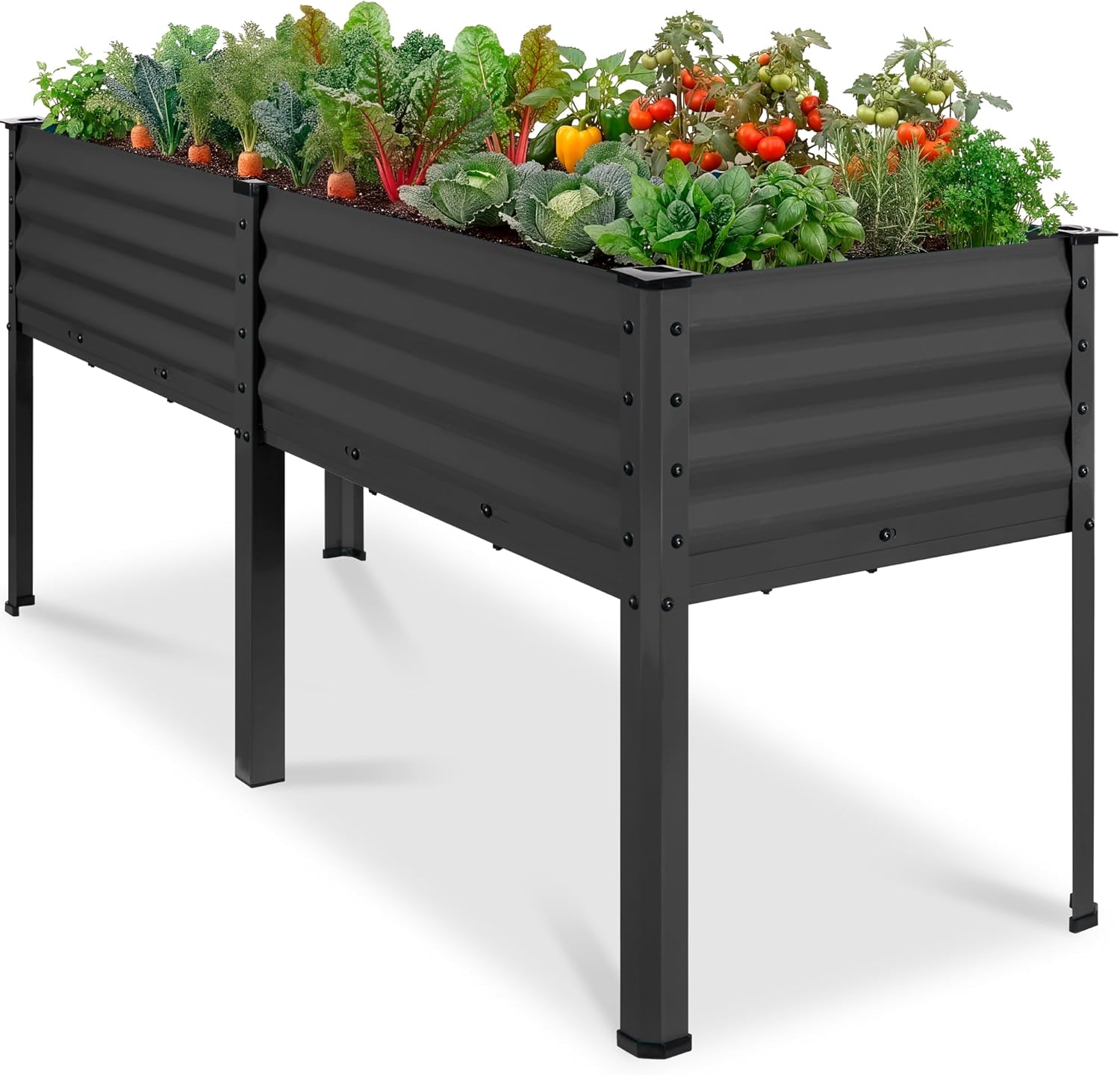
Start With the Frame: Best Choice Products Galvanized Raised Garden Bed, Charcoal
The first thing I tell anyone building beds is that the frame is the only part you buy once. Wood rots. Composite bows and fades. Anything painted peels by the second summer, and I have a painted spade hanging on my shed wall as a reminder of exactly that. Galvanized steel does not care about Ohio's freeze-thaw cycle, which is the torture test that cracks cheap plastic heads and splits painted handles in my yard every winter.
This Best Choice Products bed is 72 inches long, 24 inches deep, and 30 inches tall, and that last number is the one that matters. Thirty inches puts the soil line near your hip, which means you plant, weed, and harvest standing up. The listing specifies non-toxic materials throughout, and the charcoal finish reads almost like slate against mulch.
Before I would fill one, I would check three things. First, the panel edges: folded or rolled hems are the difference between a bed you can work around barehanded and one that draws blood every time you reach over the rim. Second, the hardware. Coated bolts, not bare steel, because a bed is a wet object for six months of the year. Third, the bracing. A six-foot span of thin steel bows outward once it is full of wet soil, and the fix is either a center brace or a stiffer panel. Ask the question I ask about every tool: is the engineering in the structure, or in the finish?
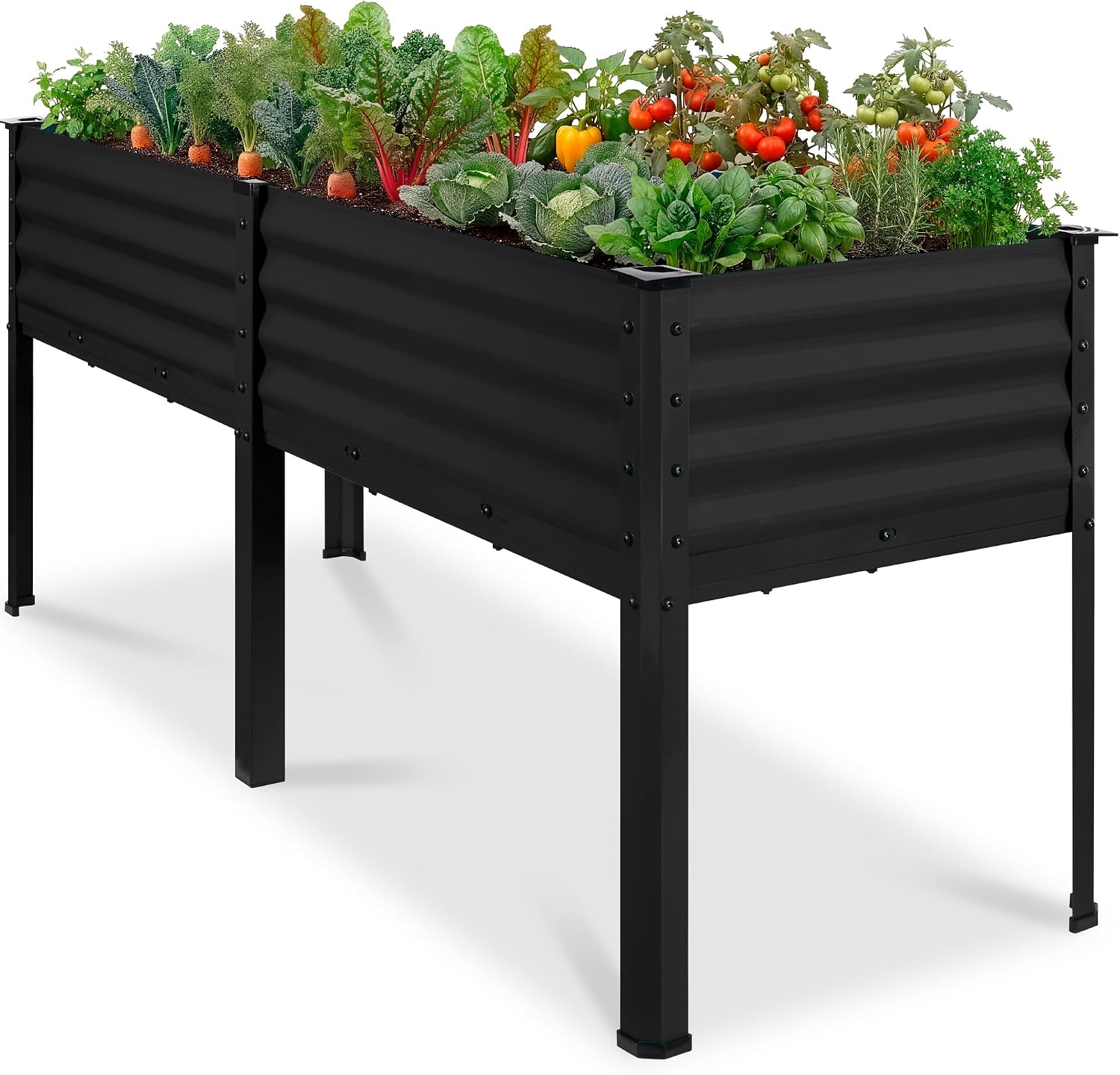
The Same Bed in Black: A Finish Decision, Not a Performance One
Same 72x24x30 footprint. Same galvanized construction. Same non-toxic material listing. The difference is the color, and I want to be honest about how much that matters. It matters for looks. A black frame reads as a deliberate design element and disappears into a shadowed fence line. Charcoal is the quieter choice, and the one I would pick against light mulch or gravel.
Darker metal warms faster in spring sun, which is a small and real effect on soil temperature in a raised bed, but it is not a reason to buy one over the other. What it is not is a durability question. Both are the same steel underneath. This is the point where I remind people that a finish is a marketing decision and the panel gauge is an engineering one, and if you cannot find a gauge number on a listing, ask before you buy. Pick the color you will still like in five years. That is the whole decision.
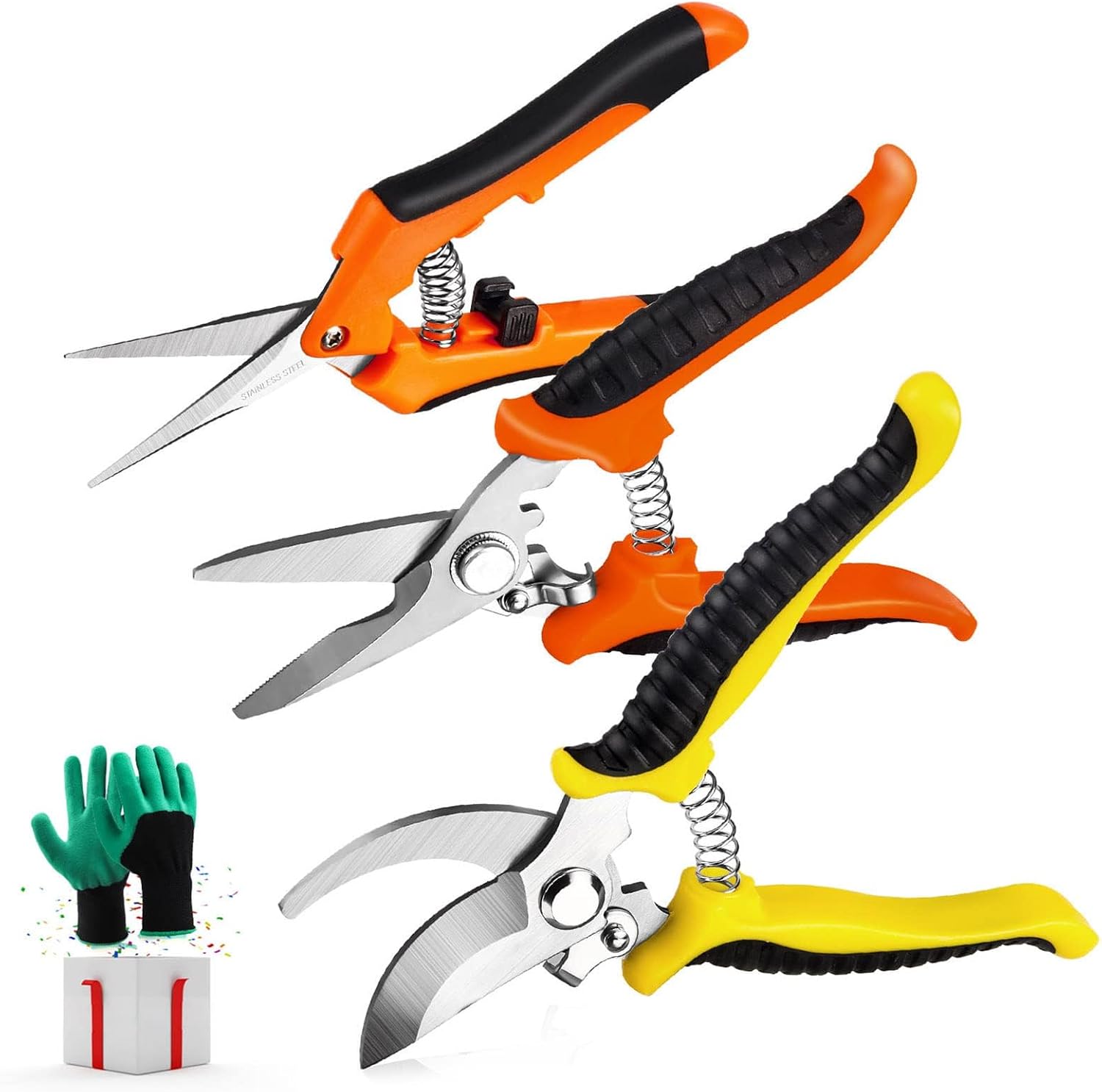
The Cheap Set That Earns Its Drawer: 3 Pack Garden Pruning Shears with Gardening Gloves
Here is the honest math on a three-pack of handheld pruners with stainless steel blades and a pair of gardening gloves in the box. My benchmark pruner is the Felco 2, and I have logged enough hours on one pair to say without flinching that it is the tool I would hand to my grandkids. It is also around fifty dollars, and it is not the right first purchase for someone who is not yet sure they will still be gardening in three years.
What a set like this buys you is redundancy and access. Three pruners means one in the kitchen for herbs, one in the shed, and one in the wheelbarrow where it will inevitably get left in the rain. Stainless blades resist the rust that eats carbon steel left outside overnight. The gloves matter more than people expect, because a pruner that fits a gloved hand without pinching is a pruner you will actually reach for.
Know what it is not. This is a light-duty tool for deadheading, tomato suckers, herb stems, and anything up to about pencil thickness. It is not a lopper and it will not enjoy a half-inch green limb. Check three things when it arrives: blade alignment with no gap, a spring that returns crisply, and a lock that actually holds the handles closed in a drawer. If any of those fail, send it back that week.
The Nozzle That Ends the June Ritual: RAINPOINT Full-Metal Garden Hose Nozzle, 2-Pack
Every June I get the same question at the farmers market, and it is always about a plastic nozzle that cracked over winter. Freeze-thaw cycling does not forgive cheap plastic, and a nozzle is the most freeze-exposed tool in the garden because it lives outside by the spigot. This RAINPOINT nozzle answers that with a full-metal body and heavy-duty construction, plus a thumb control for flow adjustment instead of a squeeze trigger.
That thumb control is the feature I would pay for. A trigger fights your hand through twenty minutes of watering and your grip is done by the time you reach the last bed. Thumb control lets you set flow and leave it, which matters when you are filling a watering can, softening a seed row, or hosing clay off a shovel head. Ten adjustable patterns covers everything from a hard jet for washing tools to a soft shower for seedlings, and high flow means you are not standing there waiting for a can to fill.
The two-pack is the practical part. One nozzle per spigot means no walking back across the yard to fetch the sprayer, and a spare means the season does not end because one gets dropped on the driveway. Metal bodies still freeze if water sits inside them, so bring them in before the first hard freeze. That single habit is worth more than any warranty.
How I evaluate gear before it earns a dock slot
I do not review a tool in April. April is the month of marketing, when everything looks great in the catalog photograph and nothing has been asked to work. Every tool that gets a recommendation from me has to survive a full growing season in my numbered beds, which means Ohio glacial-till clay, a wet spring, a dry August, and the first hard freeze.
The checks are the same for everything. I want to know about the tang, the steel extension of a head that runs up inside the handle, because a full-length tang is the difference between a tool that lasts a decade and one that twists loose in August. I want to know about the ferrule, the collar where handle meets head, because that is the first thing to fail on anything cheap. I want a steel hardness number, and if a listing calls something duty grade without one, I treat that as an answer rather than a gap.
Then I use it. Caliper checks on cutting edges every 25 hours. A handle wiggle test at the ferrule. Weight on a kitchen scale, because balance is a number and not a feeling. At 100 hours the only question left is whether the tool still does the job it did on day one. Failures go into the Dirt Ledger with a date and a photograph, because a broken tool teaches more than a survivor does. Price per season of service is the only honest value number, and it is the reason a cheap tool that lasts beats an expensive one that dies in August.
What this list actually decides
Notice the order. Structure first, cutting second, watering third. The raised bed is the only item here that changes your soil, your back, and your weed pressure at the same time, which is why it gets the biggest budget line. The pruners are a consumable you will replace or upgrade once you know how much you actually prune. The nozzle is the cheapest way to stop buying the same cracked plastic thing every spring.
The color question on the two beds is a good example of how I want you to shop. Charcoal or black changes nothing structural. Same steel, same footprint, same non-toxic material listing. Choose the one that looks right where it will live, then spend your remaining attention on the questions that do affect next October: panel stiffness, hardware coating, edge treatment, and whether the bed is tall enough that you will genuinely use it.
The reference table
Same four items, sorted by the job they do. Dimensions and materials are as the manufacturer lists them. Links go to the exact product.
| Item | What it is | Where it belongs | Get it |
|---|---|---|---|
 Visit on Amazon → Visit on Amazon →Best Choice Products Galvanized Raised Garden Bed, Charcoal |
72x24x30in elevated galvanized steel bed, non-toxic materials | The main bed, in a quiet finish that sits back against mulch | Visit on Amazon → |
 Visit on Amazon → Visit on Amazon →Best Choice Products Galvanized Raised Garden Bed, Black |
Same bed, same dimensions, black finish | Anywhere you want the frame to read as a design choice | Visit on Amazon → |
 Visit on Amazon → Visit on Amazon →3 Pack Garden Pruning Shears with Gardening Gloves |
Three handheld pruners, stainless steel blades, glove set included | Deadheading, herbs, tomato suckers, stems up to pencil thickness | Visit on Amazon → |
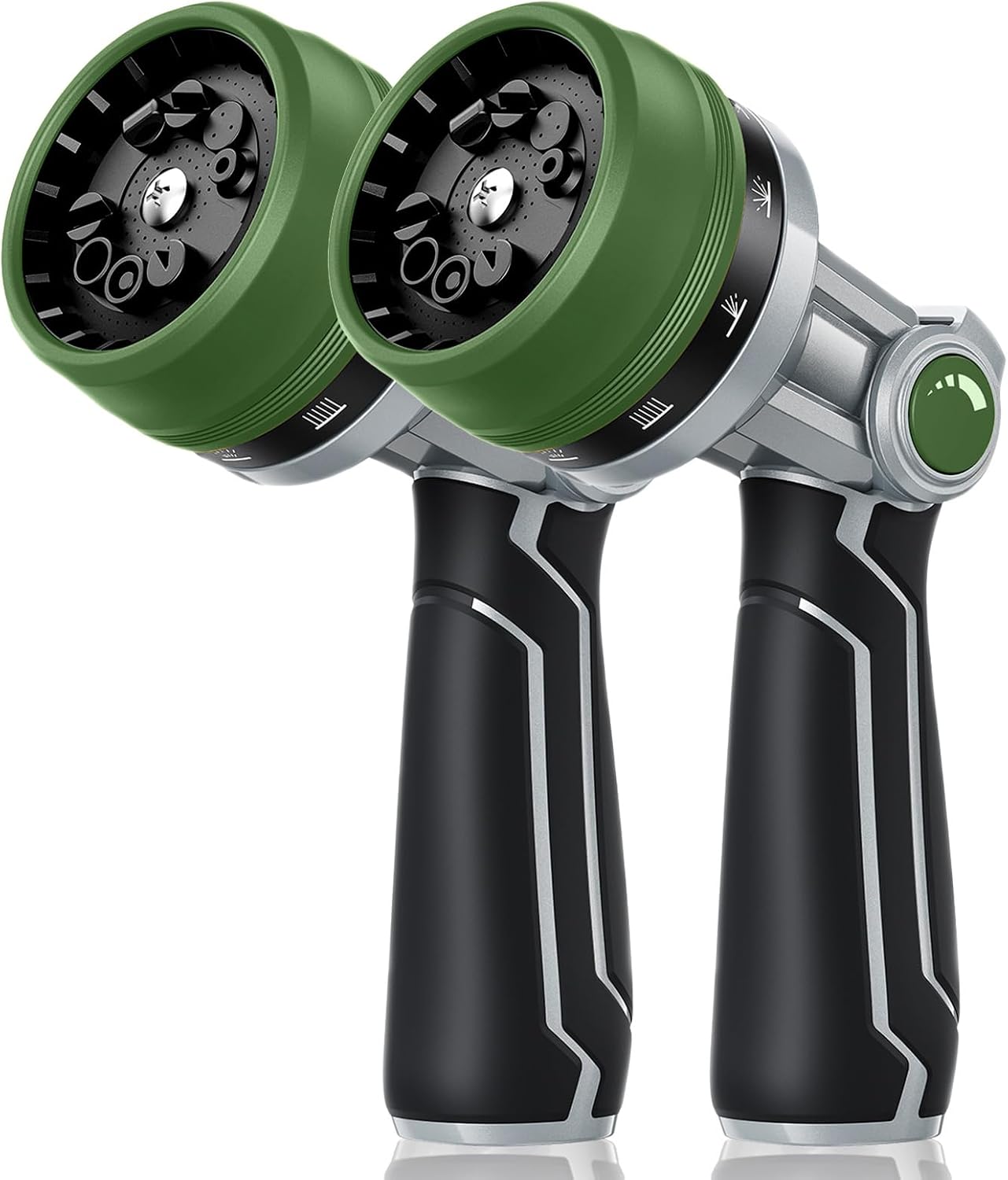 Visit on Amazon → Visit on Amazon →RAINPOINT Full-Metal Garden Hose Nozzle, 2-Pack |
Full-metal nozzle body, ten patterns, thumb flow control, dark green, two per box | One at each spigot, for watering, washing tools, and filling cans | Visit on Amazon → |
Should you buy the Best Choice Products raised bed?
Yes, if you want a frame you buy once. Galvanized steel does not rot, does not need annual sealing, and does not care what an Ohio February does to it. At 30 inches tall you work standing up, which is the difference between a bed you tend daily and one you avoid by July. Charcoal if you want it quiet, black if you want it noticed. The one thing that would change my answer is a listing with no panel gauge and no hardware detail, because that tells you where the money went.
Should you buy the 3-pack pruning shears?
Yes, as a starter set, a household set, or a set for the gardener who leaves tools in the rain. Three stainless pruners plus gloves is honest value, and redundancy is underrated. It will not replace a forged pruner with a replaceable blade and spring, and it should not be asked to cut a half-inch limb. Buy it knowing it is a light-duty tool, check blade alignment and the spring the day it arrives, and it will earn its drawer.
Should you buy the RAINPOINT nozzle?
Yes, if you are tired of the June replacement ritual. Full-metal construction is the right answer to a tool that lives outdoors through freeze-thaw, and thumb control beats a trigger for any watering job that lasts longer than five minutes. Ten patterns covers seed rows and muddy shovels alike, and the two-pack means both spigots are covered. Bring it inside before the first hard freeze and it should outlast several of the plastic ones it replaces.