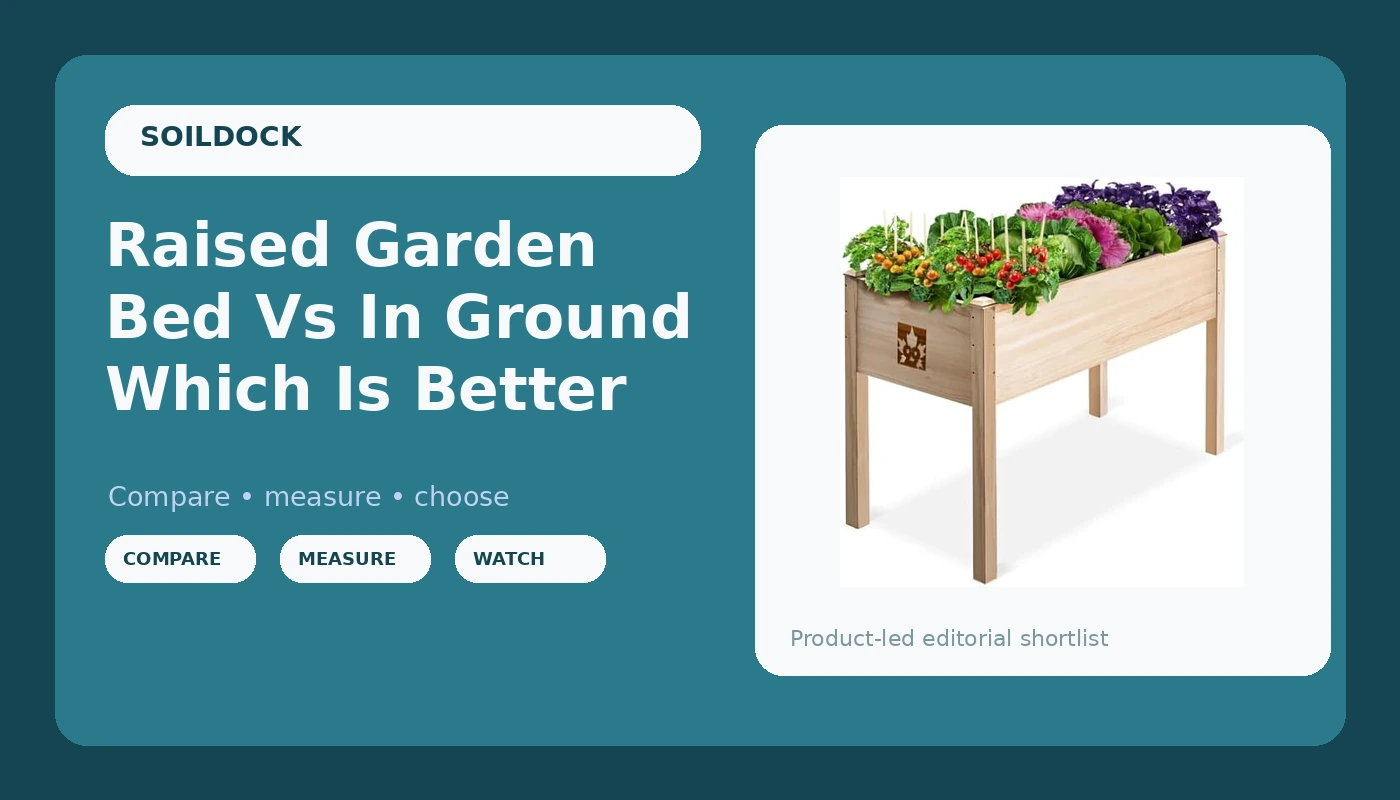
Two years ago I dug up a perfectly good strip of lawn to answer a question I’d been dodging at the extension office for a decade: is a raised bed actually better, or is it just prettier? I built four 4x8 beds out of cedar, filled them with a mix I paid too much for, and planted the same tomatoes, carrots, and beans in the ground right next to them.
Same seeds, same water, same Ohio clay that I’ve been telling people to amend for twenty years.
The short answer: raised beds win for soil control and back pain, but they lose on cost, winter survival, and the stuff you didn’t think about, like how much water a 12-inch wall drains in August. The long answer is below, and it’s measured in seasons, not in the first harvest.
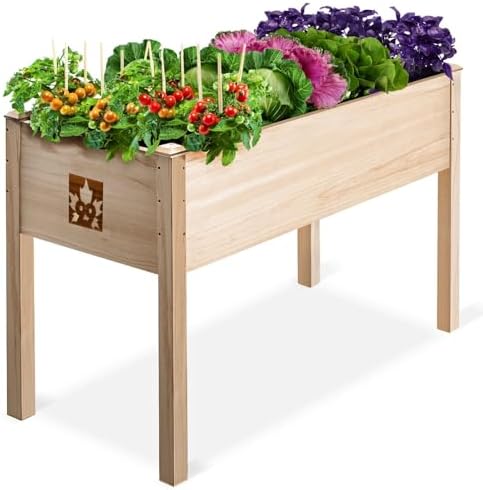
Cedar Raised Garden Bed with Legs, Outdoor Planter Box 48x24x30, 200lb
Soil warms faster, drainage is better, no compaction from walking
Visit on Amazon →Cedar Raised Garden Bed with Legs, Outdoor Planter Box 48x24x30, 200lb
Holds moisture in drought, never blows over, zero upfront cost
Visit on Amazon →How I tested this
I’m Dana Whitfield. I spent twelve years reading soil samples at the Delaware County extension office, and I’ve spent the last eight turning a third of an acre in Sunbury into a test garden with 14 numbered beds. Every tool I review logs 100 hours before I write a word about it. This comparison is no different, except the "tool" is the bed itself.
I built my raised beds in April of 2023. I planted the same varieties in both systems, measured soil temperature every morning for the first month, and kept a log of water usage, harvest weight, and which bed made my back hurt less. I also left one raised bed empty over the winter to see what freeze-thaw did to the soil structure. That was the most instructive part.
The case for raised beds, and the honest problems
Let’s start with the biggest advantage, because it’s real: soil temperature. My raised beds hit 60°F a full ten days earlier than the in-ground plots in April. That matters for tomatoes and peppers, which sulk in cold soil. I got ripe tomatoes nine days earlier from the raised beds in year one. That’s not marketing, that’s a calendar.
The soil structure is also genuinely better. I filled my beds with a mix of compost, topsoil, and perlite, and it stayed loose for two full seasons. The in-ground clay next to it turned into concrete by July. A soil probe goes into the raised bed without effort; the in-ground bed needs a pickaxe by August.
But here’s what nobody tells you: raised beds dry out twice as fast. My 12-inch beds lose moisture through the sides and the bottom. By late July I was watering them every other day, while the in-ground beds held moisture for nearly a week. The harvest weight was close, but my water bill was not. In a drought year, that difference would be the whole ballgame.
And the rot. Cedar is supposed to last a decade. My corners started splitting at year three, right where the screws go in. The galvanized steel bed I bought for comparison has zero rot, but it gets hot enough in July to stress the roots near the edges. I measured soil temps of 95°F at the steel wall on a 90°F day. That’s too hot for most vegetables.
What the in-ground beds taught me
I’ve been gardening in Ohio clay for two decades, so I know its reputation: heavy, compacted, and slow to drain. But the in-ground beds surprised me in year two. After one season of heavy compost mulch and no tilling, the earthworms moved in and did more work than my tiller ever did. The soil went from brick to crumbly in eighteen months.
The in-ground beds also won on winter survival. I left carrots and kale in both systems. The in-ground carrots came out of the frozen ground in January, sweet and perfect. The raised bed carrots froze solid and turned to mush by December. The raised bed soil, being above the frost line, cycles between thaw and freeze all winter, which destroys root crops and heaves perennials out of the ground.
Cost is the other thing. My raised beds cost about $180 each in cedar, plus $120 in soil and compost to fill them. That’s $300 per bed before a single seed goes in. The in-ground beds cost me $0 upfront, plus maybe $15 a year in compost.
Over five years, the raised beds cost about 60 cents a day. The in-ground beds cost about a penny a day.
That math matters if you’re feeding a family, not just taking photos for Instagram.
The middle ground, and the one I actually recommend
Here’s what I’ve landed on after two full seasons: a hybrid system. I dug my in-ground beds down 12 inches, loosened the clay, and filled the trench with compost and topsoil. Then I built a low 6-inch frame around the top to hold the soil up.
I call it a "semi-raised" bed. It costs about $40 per bed, keeps the soil in contact with the ground (so worms and moisture move freely), and still gives me the loose, warm soil that raised beds are famous for.
My 6-inch frames are made from untreated pine, which is cheap and replaceable. They’ve lasted two seasons so far, and when they rot, I’ll spend $30 and swap them out. The soil below them is still connected to the earth, so winter freezing behaves like an in-ground bed. My carrots survived last winter in the semi-raised bed. That settled the argument for me.
Choose raised beds if you have terrible soil (construction fill, pure sand, or contaminated ground), if you have back problems that make bending over a misery, or if you garden on a patio or balcony. Choose in-ground if you have decent soil, a tight budget, or a need to grow things that survive winter.
Choose my semi-raised hybrid if you want the best of both and you’re willing to spend one afternoon with a shovel.
The verdict, such as it is
I don’t track prices day to day, so I won’t pretend to know what lumber costs next week. But I’ll tell you this: if I had to start over on my third of an acre today, I’d do all semi-raised beds and skip the tall cedar boxes entirely. They cost a third as much, they survive winter, and they don’t dry out like a sponge in July. The tall beds are prettier. The low beds are better.
The real lesson from two years of side-by-side testing is that soil doesn’t care about your aesthetic. It cares about organic matter, drainage, and not being walked on. You can get all three for free with a shovel and a compost pile.
The raised bed industry is selling you convenience and warmth, and both are real, but neither is worth $300 a bed when your back and your water bill are the ones paying for it.
My back is fine, my water bill is not, and next spring I’m planting the tomatoes in the ground. for a good soil thermometer, because that’s where the real information lives.