Every spring I watch the same thing happen at garden centers: people load carts with painted shovels and flimsy beds because the packaging looks good in April. By August, the handles have snapped and the beds have rusted through, and the whole backyard garden setup has become a pile of expensive disappointment. A garden is not a collection of pretty objects. It is a system of a bed to hold soil, hand tools to work it, and a mower to keep the edges tidy, and each piece has to survive a full season of real weather before it earns a place in your shed. That is the standard I apply to every recommendation I make, and it is the standard you should apply before you spend a dollar.
Related: How to Read Your Soil Test Before You Plant →
Quick answer
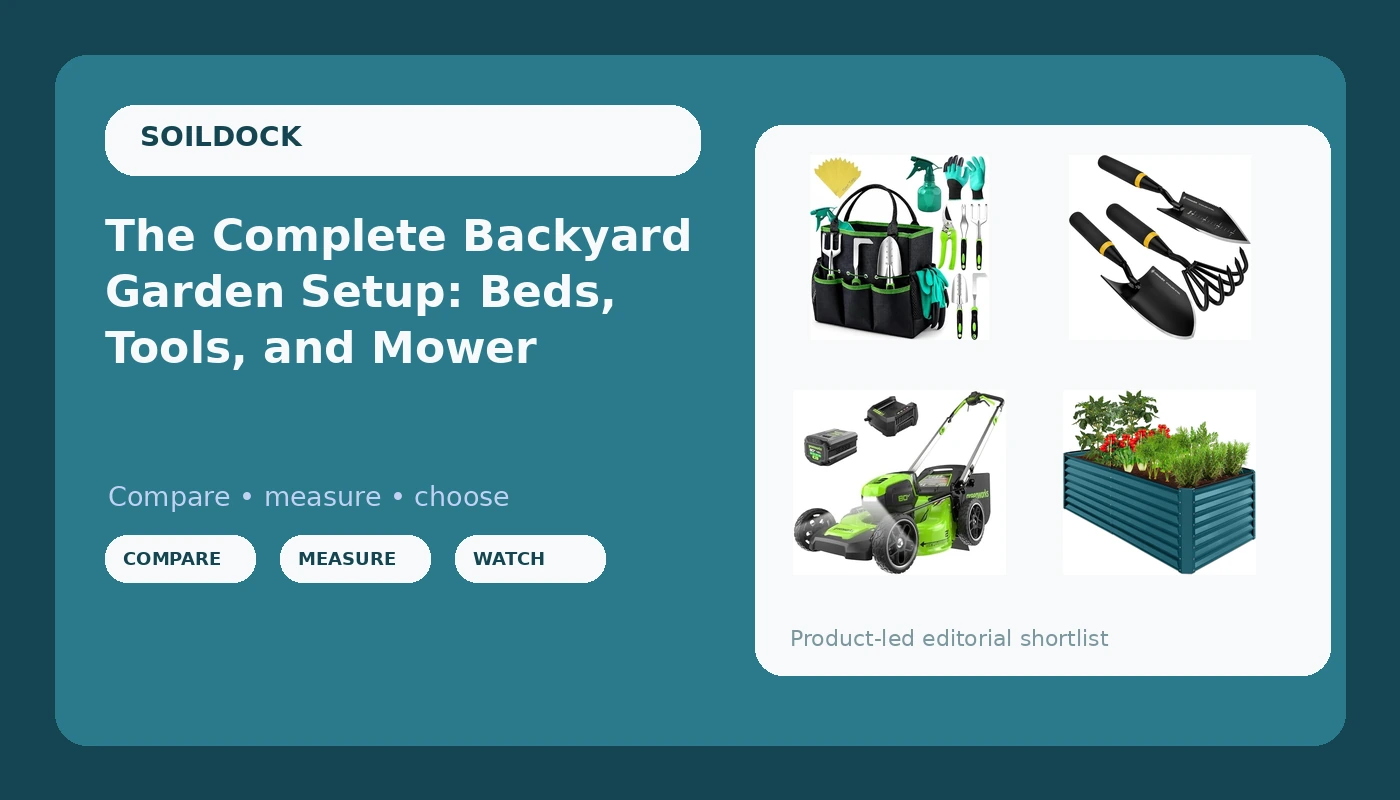
For a complete first-season backyard garden setup, start with the Best Choice Products 6x3x2ft metal raised bed as your growing foundation, pair it with the Kemaier 3-Piece stainless steel tool set for digging and weeding, add the Heavy Duty Gardening Tools set when ergonomic handles matter more than a matching finish, and finish the surrounding lawn with the Greenworks 80V 21in self-propelled mower. None of these are showpieces. They are working tools and structures chosen for materials that hold up in clay soil, freeze-thaw winters, and weekly use.
Four useful options
| Model | Best fit | What stands out |
|---|---|---|
| Best Choice Products 6x3x2ft Metal Raised Garden Bed | Deep-root vegetable and herb beds | 269-gallon capacity in 100% non-toxic materials |
| Kemaier 3-Piece Garden Tool Set | Stainless steel hand tools | Heavy-duty stainless steel construction |
| Heavy Duty Gardening Tools Set | Ergonomic everyday hand tools | Ergonomic handles in a durable green set |
| Greenworks 80V 21in Self-Propelled Mower | Battery-powered lawn care | 80V power with 4.0 Ah battery and charger |
The foundation: Best Choice Products 6x3x2ft Outdoor Metal Raised Garden Bed
Depth is the first thing I check in a raised bed, because most failures come from beds that are too shallow for the roots they are asked to hold. A 2-foot depth gives carrots, tomatoes, and peppers the soil column they need, and it also means the bed holds more moisture between waterings through dry August weeks. Metal construction matters for a different reason: it does not soak up and hold water the way wood does, so the structure itself resists the rot that ends most wooden beds by year three. The trade-off is that metal beds heat up faster in full sun, so place it where roots can get afternoon shade, or mulch the surface to keep soil temperatures even.
The stainless hand tools: Kemaier 3-Piece Garden Tool Set
Stainless steel is my default recommendation for hand tools that live outside, because it shrugs off the moisture that ruins painted carbon steel by fall. In clay soil, the edge has to push through dense, sticky material all season, and a heavier head helps the tool do the work instead of your wrists. The trade-off is that stainless can be softer than hardened carbon steel, so the edge may need more frequent sharpening. For a gardener who wants one set that stays rust-free through a full season, that is a fair trade.
The ergonomic set: Heavy Duty Gardening Tools Set
Ergonomics is not a luxury feature, it is a durability feature. A handle that spreads pressure across your palm instead of digging into one spot means you can work longer, and a tool you actually use is worth more than one that sits in the shed because it hurts. The trade-off with ergonomic sets is that the grip design can add bulk, and some ergonomic handles are built around softer materials that wear faster than bare wood or metal. Check the grip material before you buy, and if it is a soft rubber, plan for replacement after a season or two.
The mower: Greenworks 80V 21in Self-Propelled Lawn Mower
Battery mowers have earned their place in the shed because they cut out the gas, the oil, and the pull-start, and an 80V system has enough voltage for a 21-inch deck on a normal suburban lot. Self-propelled drive is the feature I recommend to anyone with a slope, because it keeps the mower moving at a steady pace instead of turning every pass into a shoulder workout. The trade-off is runtime: a 4.0 Ah battery will handle a typical lawn, but if your lot is large or the grass is thick, you will want a second battery to finish without stopping to recharge.
Prices and availability may change. Product images, names, and retailer links must be matched by verified ASIN. Do not state a current price, rating, stock status, or measured result without current evidence.
What to look for in a raised garden bed
A raised bed is the single most important purchase in a new garden, because everything else depends on the soil it holds. Depth is the first number to check. Shallow beds of 6 to 12 inches limit you to lettuce and herbs, while a 2-foot depth opens the door to carrots, tomatoes, peppers, and any crop with a taproot. The capacity tells you how much soil the bed will actually hold, and a larger capacity means more moisture retention and more room for roots to spread.
Material is the second decision. Wood beds are cheap and familiar, but they rot from the inside out and need replacement every few years. Metal beds resist rot and do not harbor the pests that hide in damp wood, but they conduct heat, so soil in a metal bed can climb higher on hot afternoons. Non-toxic materials matter if you are growing food, because the bed liner and finish sit in direct contact with the soil your vegetables grow in. Before you buy, confirm the bed lists non-toxic materials and check that the depth matches the crops you actually plan to grow.
Placement is the third factor, and it is the one most people get wrong. A raised bed needs at least six hours of direct sun for vegetables, and it needs level ground so water does not pool at one end. Set the bed before you fill it, level the base, and think about access from both sides so you can reach the middle without stepping into the soil and compacting it.
What makes a hand tool last
When I look at a hand tool, I start with the tang, which is the steel extension of the head that runs up inside the handle. A full-length tang is the difference between a tool that lasts a decade and one that twists out of the handle in August. If the tang is a welded stub, the head will work loose, no matter how good the paint looks.
The ferrule is the metal collar where the handle meets the head, and it is the first thing to fail on a cheap tool. If the wood cracks under the ferrule after one season, that is a design failure, not bad luck. Steel hardness also matters: too soft and the edge rolls over in clay, too hard and it chips. I want a mid-range hardness that resharpens instead of shattering. Handle material is the last check. Bare wood and composite handles tell you what they are made of, while painted handles hide the wood underneath and often flake by June. A tool with a good tang, a tight ferrule, and honest handle material will still be working at hour 100.
How to build your first-season setup
- Level the ground and mark the bed footprint so water drains evenly and the structure sits square.
- Assemble the raised bed and fill it with a mix of topsoil and compost, leaving a couple of inches at the top for mulch.
- Choose hand tools by handle, steel, and tang before you look at color or branding.
- Match the mower to the size of your lawn and the slope, not to the horsepower number on the box.
- Log your hours and inspect every tool at the 25-hour and 100-hour marks, checking the ferrule, the edge, and the grip.
Practical guidance for your first season
- Start with one bed before expanding, so you learn your soil, your sun, and your watering habits without overcommitting.
- Test your soil before you amend it, because guessing at pH and nutrients wastes money and can do more harm than good.
- Keep hand tools clean and dry after every use, and sharpen the edges before they roll, not after.
- Charge the mower battery after each mow so it is ready for the next pass, and store it indoors over winter.
- Replace worn grips and loose ferrules as soon as you notice them, because a small repair now prevents a snapped handle in August.
Which option should you choose?
Choose the Best Choice Products 6x3x2ft Outdoor Metal Raised Garden Bed when you want deep-root growing capacity in a non-toxic metal structure that will not rot. Choose the Kemaier 3-Piece Garden Tool Set when rust resistance is your priority and you want stainless steel heads that shrug off a wet season. Choose the Heavy Duty Gardening Tools Set when ergonomic handles matter most, or when you need a ready-made gift for a gardener. Choose the Greenworks 80V 21in Self-Propelled Lawn Mower when you want battery-powered, self-propelled lawn care without the gas can.
These recommendations are based on the materials and specifications each product lists. I have not logged 100 hours on these exact units, and my durability verdicts are reserved until they have survived a full season in the Dirt Ledger. The paint on a handle tells you nothing about the steel underneath, and the same rule applies to the bed and the mower.
The bottom line
A backyard garden setup is only as good as the materials it is built from. The Best Choice Products raised bed gives you the depth and non-toxic construction that a vegetable garden needs, the Kemaier set covers your stainless steel hand tools, the Heavy Duty set adds ergonomic comfort, and the Greenworks mower handles the surrounding lawn without gas. Buy for the tang, the ferrule, the depth, and the battery system, not for the color of the paint. If you do that, your setup will still be working when the first hard freeze locks the beds, and it will be ready to go again next spring.