Twenty years of reading soil samples at a county extension desk taught me that most lawn problems are not tool problems. Nine seasons of cutting my own third of an acre in Sunbury, Ohio taught me that some of them absolutely are. This spring lawn care kit comparison covers four items that end up in the same shopping cart every April: a concentrated liquid fertilizer, two versions of the same Makita cordless string trimmer, and a metal hose nozzle. Three of them are tools. One of them is soil food. Buy them in the wrong order and you will spend the summer fighting grass you could have fed.
Related: Reading a Soil Test Before You Buy Anything
The short answer: if you already own Makita 18V LXT batteries, the bare tool is the honest buy, and if you do not, the kit is the only one of the two that runs on day one. The fertilizer earns its place only after a soil test says your lawn is actually hungry, and the metal nozzle is the cheap item you will touch more than either trimmer.
I will be straight with you about the limits of this page. None of these four has a full growing season in my Dirt Ledger yet, so I am not going to pretend I have caliper data on them. What I can do is judge them the way I judge everything at hour zero: what the design promises, what it hides, and what it will cost you per season of service. That framework is the whole reason this site exists.
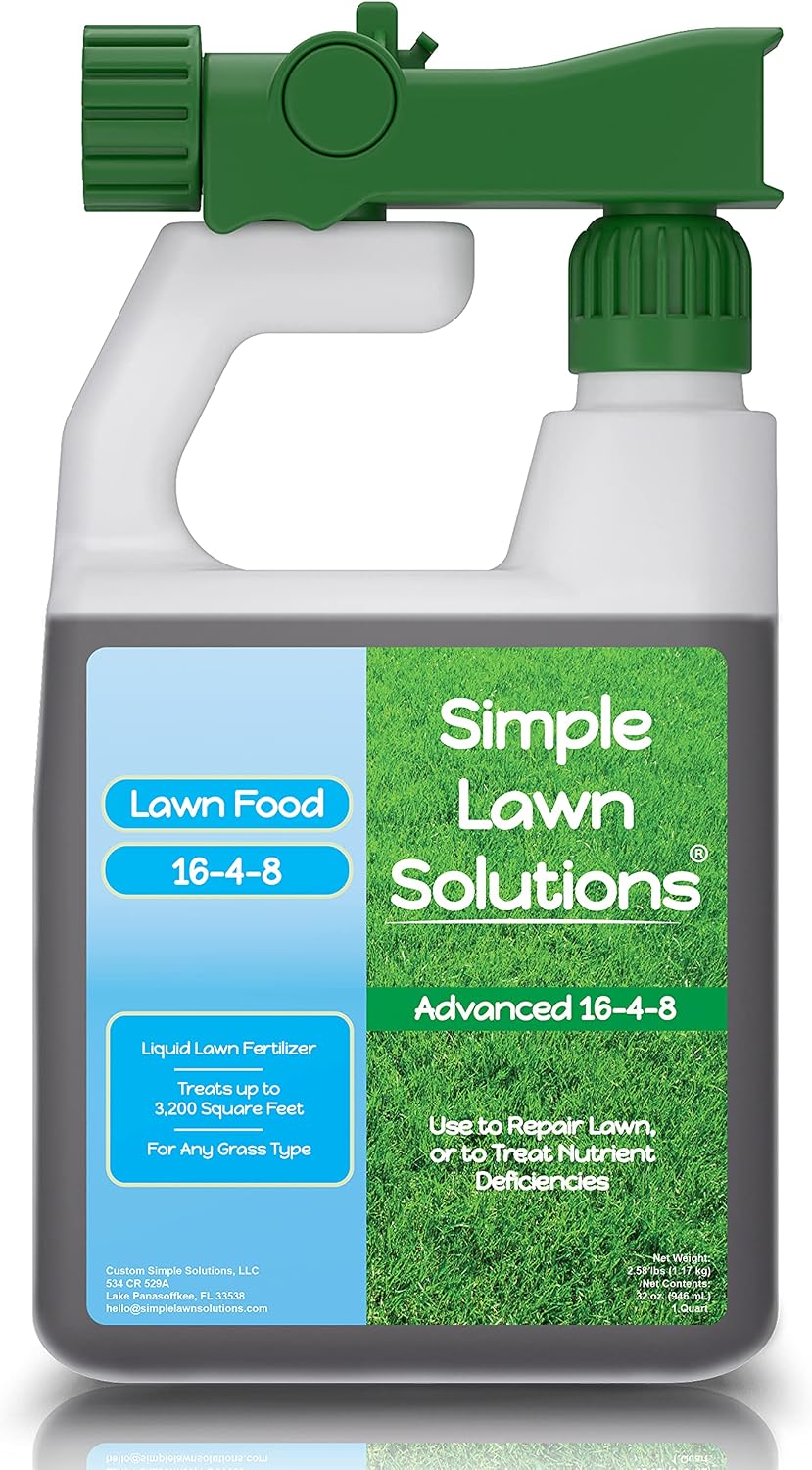
Simple Lawn Solutions Advanced 16-4-8 Balanced NPK Liquid Fertilizer (32 Ounce)
Balanced analysis that feeds without pushing pure top growth, hose end concentrate format, labeled for any grass type
Liquid feeding means repeat applications all season, and 32 ounces disappears fast on a big lawn
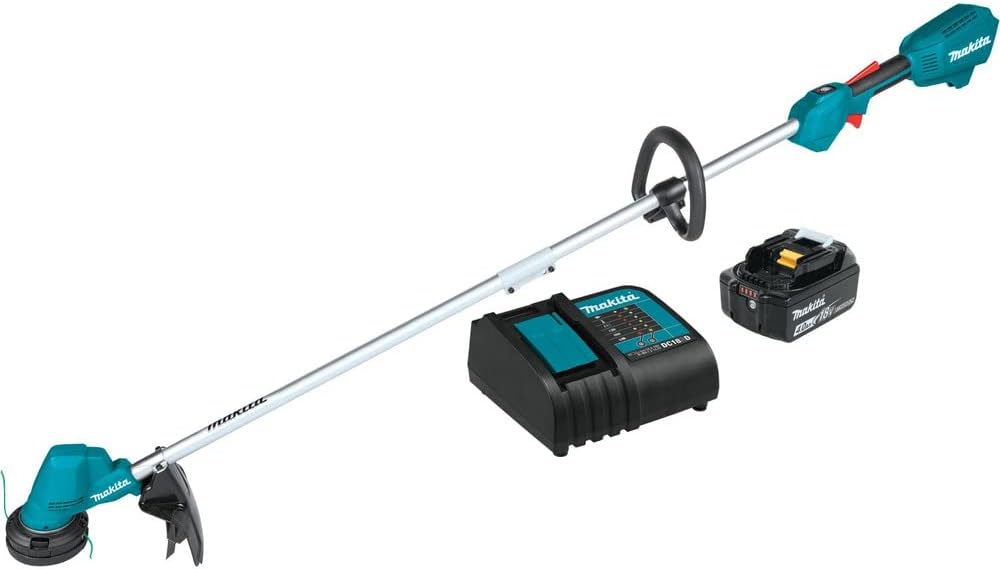
Makita XRU23SM1 18V LXT Brushless Cordless 13" String Trimmer Kit (4.0Ah)
Runs out of the box with a 4.0Ah battery and charger, brushless motor, shares the LXT platform with every other Makita 18V tool
You pay for a battery and charger whether you needed them or not, which is the largest single line in the cart
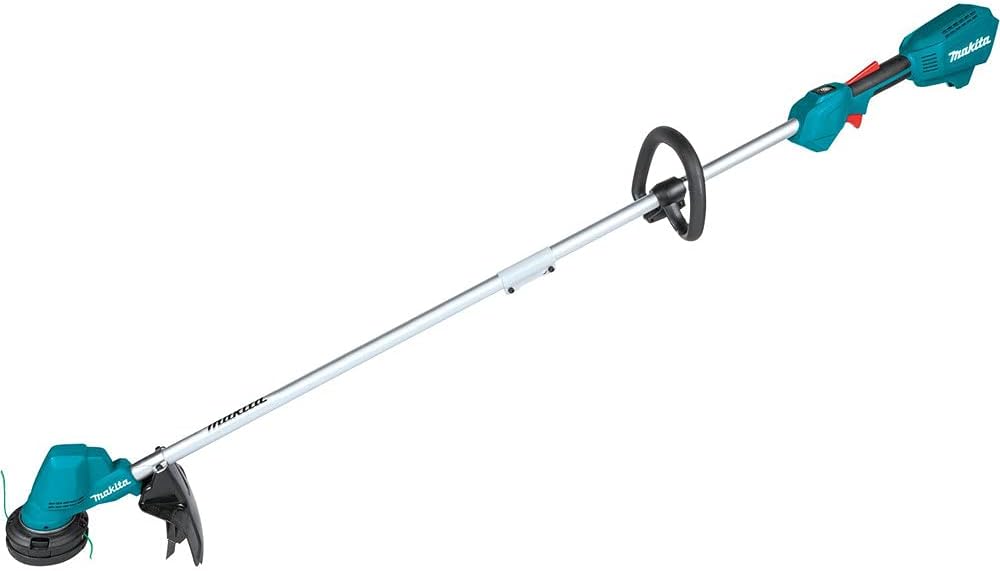
Makita XRU23Z 18V LXT Brushless Cordless 13" String Trimmer, Tool Only
The same trimmer without the battery tax, the correct buy for anyone already invested in LXT
Useless in the box if you own no LXT batteries, and a bad first purchase for a new homeowner
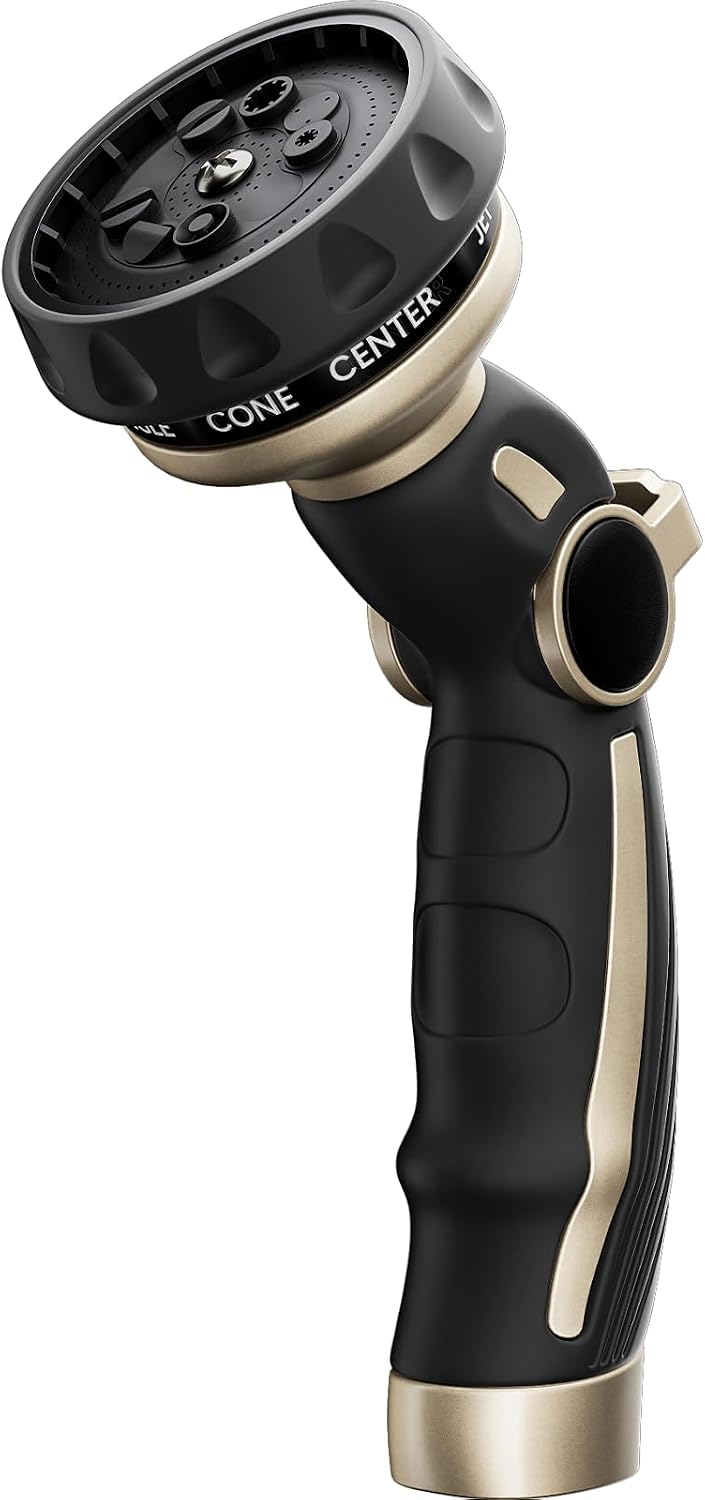
RESTMO Hose Nozzle Heavy Duty Metal Water Hose Sprayer
Metal body instead of the plastic that cracks in one freeze-thaw cycle, and it is the tool you grab every single time you water in a feeding
A nozzle never fixes a lawn problem, and the seals are still the part that fails first
Prices and availability were captured from Amazon Creators API and may change.
How I judge lawn gear before it earns a dock slot
In hand tools I check the tang and the ferrule first, because that is where cheap tools confess. Power lawn gear has its own tells, and they are just as predictable.
For a string trimmer I want to know three things. First, what platform is it locked to, because a battery is a subscription and not an accessory. Second, is the motor brushless or brushed, since brushes are the wear part that turns a five season tool into a two season tool. Third, how does the line feed, because a bump head that jams is the reason a lot of trimmers end up in the back of the garage by July.
For fertilizer I want the analysis, the form, and the coverage claim. A bag or bottle that tells you the ratio but not how many square feet it treats is a marketing document, not a label.
For a nozzle I want the body material and the seal material, in that order. The body is what you see in the photo. The seal is what fails in February.
Notice what is not on those lists: color, finish, and the word "pro grade." I have watched a baked enamel spade flake by June while the plain forged one next to it dug another hundred holes. Paint is the cheapest thing a manufacturer can put on a tool and the easiest thing for a buyer to fall for.
The trimmer decision: kit or bare tool
This is the real fork in this comparison, because the Makita XRU23SM1 kit and the Makita XRU23Z are the same 13 inch brushless cordless trimmer. The difference is what comes in the box.
The XRU23SM1 kit ships with a 4.0Ah 18V LXT battery and a charger. The XRU23Z is the tool only. That is it. Everything you read about the cutting swath, the brushless motor, and the 18V LXT platform applies to both, so the decision is not about the trimmer at all. It is about whether you already own the batteries.
If you are starting from zero, the kit is the only rational choice, and it is not close. A bare trimmer with no battery is a paperweight with a handle. You would have to buy a battery and charger separately, and buying them bundled is almost always cheaper than buying them one at a time.
If you already run Makita 18V tools, the bare tool is the better math. You are paying for the trimmer and nothing else, and the LXT platform is one of the genuinely good reasons to standardize on a brand. One battery family across a trimmer, a blower, a drill, and a hedge trimmer means fewer chargers on the bench and fewer dead packs in a drawer.
Here is the part the spec sheets will not tell you. A brushless motor is a durability claim, not a performance claim. It removes the carbon brushes that wear down, which is exactly the kind of wear I log at 25 hour intervals. On a tool you will use forty times a summer for eight or ten years, that matters more than a fraction of a pound of weight.
The trimmer's real enemy in my beds is not the motor. It is the line head and the operator. Trimming against a foundation wall grinds the spool housing against concrete, and trimming wet grass at full throttle cooks a cheap head. Whatever you buy, buy a spare spool and learn to reload it in the shade instead of in the sun.
The fertilizer: what 16-4-8 is actually telling you
Those three numbers are not a quality rating. They are the percentage by weight of nitrogen, phosphorus, and potassium, in that order. So a 16-4-8 product is 16 percent nitrogen, 4 percent phosphate, and 8 percent potash, with the rest being carrier, water, and minor ingredients.
Why does that ratio matter for a lawn? Because grass is a nitrogen hungry plant, and 16-4-8 leans on nitrogen while keeping phosphorus modest. Phosphorus is the nutrient that runs off into ponds and streams and feeds algae, and most established lawns in Ohio already have plenty of it sitting in the soil from decades of applications. If you have never soil tested, you may be buying phosphorus you do not need.
The Simple Lawn Solutions product is a liquid concentrate in a 32 ounce bottle, labeled for any grass type, and formulated as a spring and summer feeding. Liquid feeding does something granular feeding does not: it gets nutrients into the leaf and root zone fast, which is why it is the tool for a lawn that needs a push before a party or after a rough winter. The trade off is duration. Granular feeds release slowly. Liquid feeds are more like a meal than a pantry, so you will be back out there in a few weeks.
Two rules from the extension desk. Do not feed a lawn that is dormant, drought stressed, or about to get two inches of rain, because you are paying for nutrients that will leave in the runoff. And do not feed on top of a soil test you have not read. I spent twelve years watching homeowners buy fertilizer to fix a compaction problem, and the fertilizer never once fixed it.
The nozzle you will touch more than anything else
Nobody writes a love letter to a hose nozzle, and yet it is the tool that comes out of the shed most often. You use it to water in the fertilizer, rinse the trimmer head, wash the pollen off the deck, and top up the birdbath. It is the highest frequency tool in this entire list.
The RESTMO is built around a metal body rather than the plastic shell that most nozzles use. That is the whole argument, and it is a good one. Plastic nozzles fail in one of two ways: the body cracks at the threads, or the trigger pivot wears oval and starts leaking down your wrist. Metal addresses the first failure. The second failure is why I still tell people to bring the nozzle inside before the first hard freeze.
Freeze-thaw cycling is the test I trust more than any spec sheet. Water sits in the body, freezes, expands, and finds the weakest seam. A nozzle left on the spigot through an Ohio January is a nozzle you will replace in April. That is not a knock on this one. It is the same advice I give about every hose end device I own.
What a nozzle will not do is fix a watering problem. If your lawn is dry and your soil is compacted, a fancier sprayer just moves the same water across the same hard surface. Water deeply and less often, and let the soil do the work.
Where each of these loses
I do not believe in a comparison where everything wins, so here is the honest side of the ledger.
The kit costs more than the bare tool by design, and if you own LXT batteries you are buying a spare battery and charger you may not need. That is money that could go into a soil test and a season of fertilizer.
The bare tool is the worst possible first purchase for a new homeowner with no Makita batteries, because it does not work alone. A tool only listing is a great deal for the right buyer and a frustrating box for the wrong one.
The fertilizer is a commitment, not a one time purchase. A 32 ounce concentrate is a season or two of feedings on a modest lawn and a single summer on a big one, and it does nothing for soil structure, pH, or compaction. It is food, not medicine.
The nozzle is a nozzle. It is the least expensive item here and the least likely to change your lawn. Buy it for the metal body and the fact that you will not be shopping for another one next spring.
Price per season of service
This is the only price math I trust, and it is simple: divide what you pay by how many seasons the thing actually serves.
A cordless trimmer that runs eight seasons costs you one eighth of its price per year, which is why a brushless platform tool usually beats a cheap corded trimmer that dies in year two. The battery is the wild card, because lithium packs fade and a replacement pack resets the math partway through the tool's life.
Fertilizer is an annual cost, always. There is no such thing as a fertilizer that pays for itself across five years, and anyone selling you one is selling you a story.
A metal nozzle that lasts four or five seasons beats three plastic ones that crack in the same window, even if each plastic one is cheap. That is the whole case for spending a little more on the smallest item in the cart.
Run that math on all four and the ordering becomes obvious. The trimmer is a decade scale purchase. The fertilizer is a seasonal one. The nozzle sits in between, and it is the one you will be glad you did not cheap out on.
Bottom line
If you are starting from nothing and you want one cart that gets you mowing edges and feeding turf this spring, take the Makita kit, the 16-4-8 concentrate, and the metal nozzle, and skip the bare tool until you own batteries. If you are already in the LXT ecosystem, swap the kit for the bare tool and put the difference into a soil test.
And if you only buy one thing on this page, buy the one you will actually use weekly. For most people that is the nozzle, and for anyone with an overgrown fence line it is the trimmer. Fertilizer comes third, because it is the only item here that can make a lawn worse if you apply it without reading a soil test first.
All four of these are on the fall watch list for the Dirt Ledger. The trimmer gets the caliper and hour log once it has a full season of clay and fence line work behind it. The nozzle goes in the shed in November and comes back out in April, which is the freeze-thaw test I trust most. Check back after the first hard freeze for the dated results.