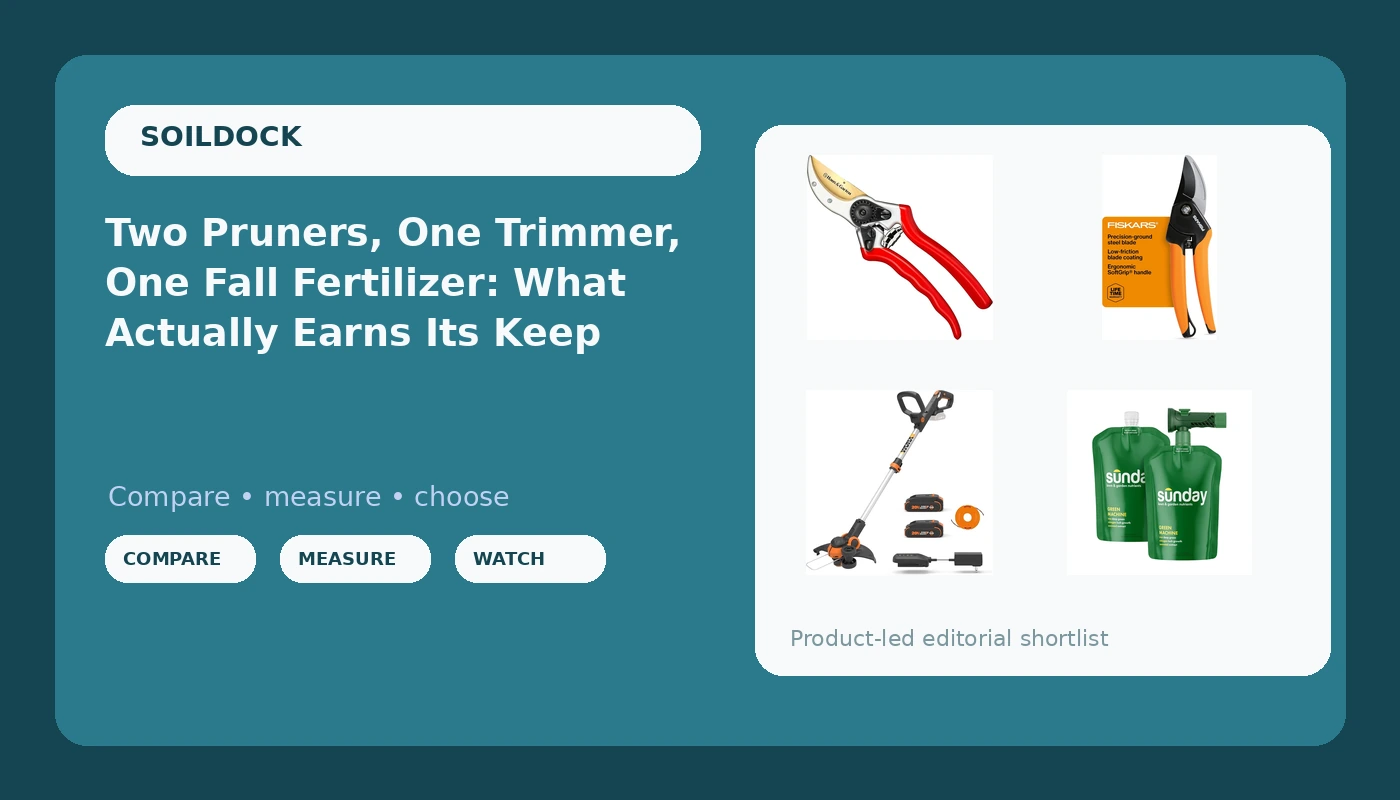
I spent twelve years behind the soil-testing desk at the Delaware County extension office, reading homeowners' sample bags and hearing the same opening line: "I think I need to buy something." Most of the time, they did not. They needed a sequence. They had bought the pruning shears before they knew what they were cutting, the string trimmer before they had an edge worth trimming, and the fertilizer before anyone had read the soil test. So when four products land in one comparison, I read them the way I read a sample bag: what job is this actually built for, and what will it look like after a season of my clay?
This is a straight comparison of pruning shears and lawn tools that end up in the same shed on the same Saturday: two bypass pruners, a cordless string trimmer that converts to an edger, and a liquid fall fertilizer. Different jobs, one buying decision.
Short answer: the Fiskars SoftGrip is the pruner I would hand a new gardener, the Haus & Garten ClassicPRO is the one to reach for when the cuts run thick, the WORX WG163 earns its shelf space if you have more than a few hundred square feet of turf, and the Sunday Green Machine is a fall feeding you apply only after a soil test says the lawn is hungry.
One note before the table. Prices move constantly, so every row sends you to the listing rather than freezing a number that will be wrong by November. Check current Amazon price before you commit.
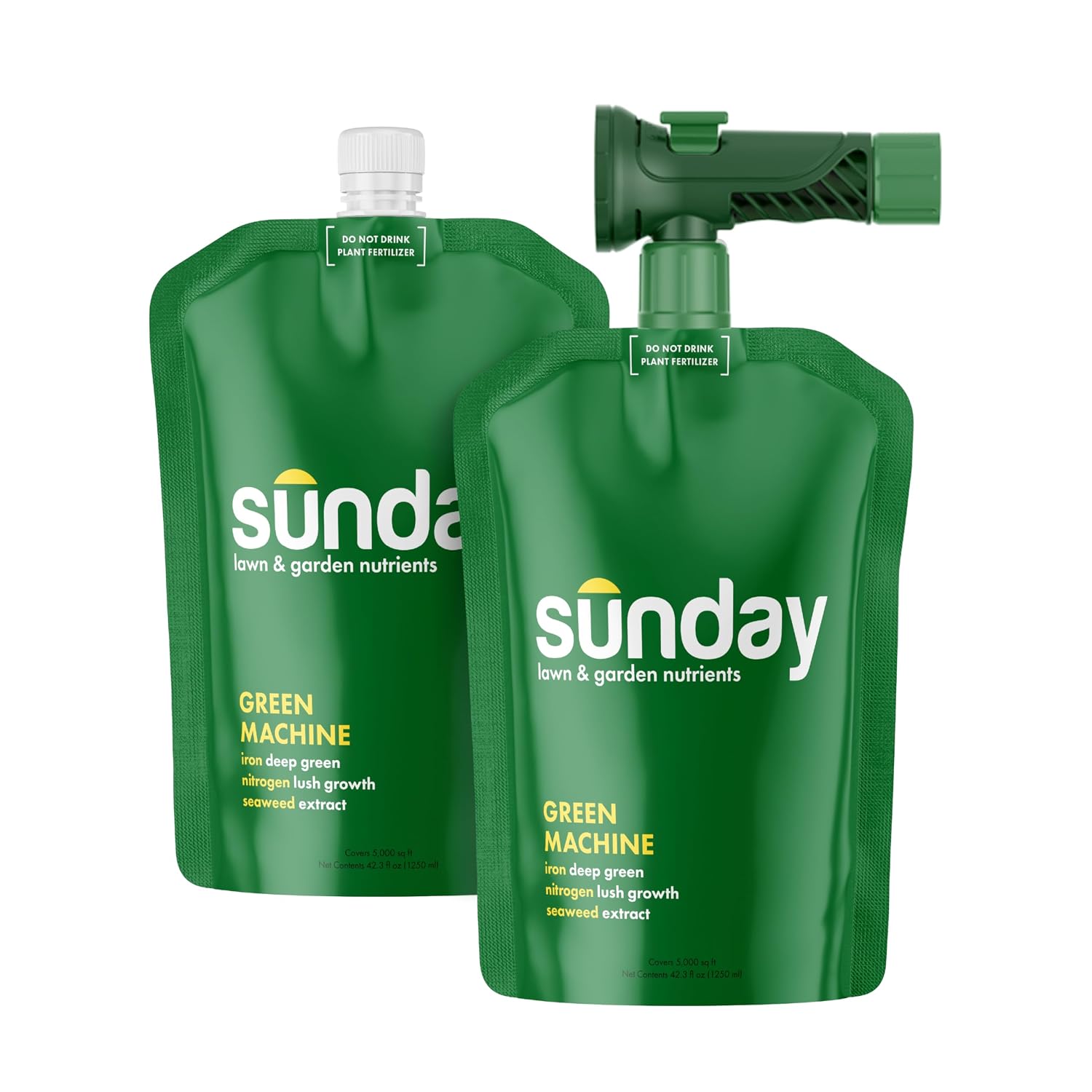
Sunday Green Machine Liquid Lawn Fertilizer, 2 Pack, Covers 10,000 Sq Ft
Liquid feeding that reaches a clay root zone faster than a prill sitting on the surface, and a 2-pack covers 10,000 sq ft so the per-application math is easy to run
It is a consumable, it needs a sprayer and water, and it is the wrong purchase if your soil test says the lawn is not hungry
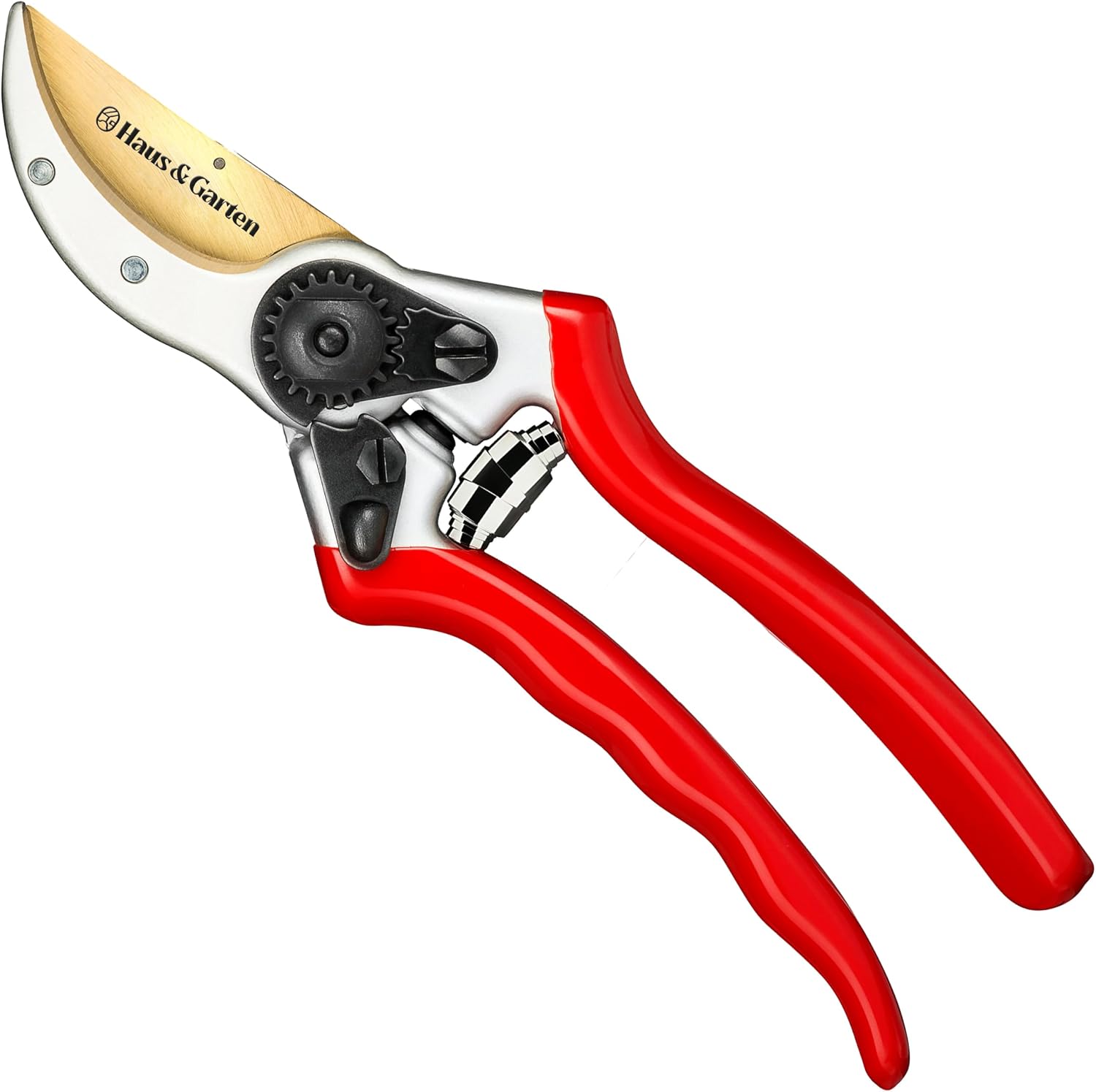
Haus & Garten ClassicPRO 8.5" Professional Premium Titanium Bypass Pruning Shears
An 8.5 inch blade with a titanium-coated edge, built for the heavy end of handheld cutting rather than light deadheading
Heavier in the hand than the budget option, and a coating is not a hardness number, so the steel still has to prove itself
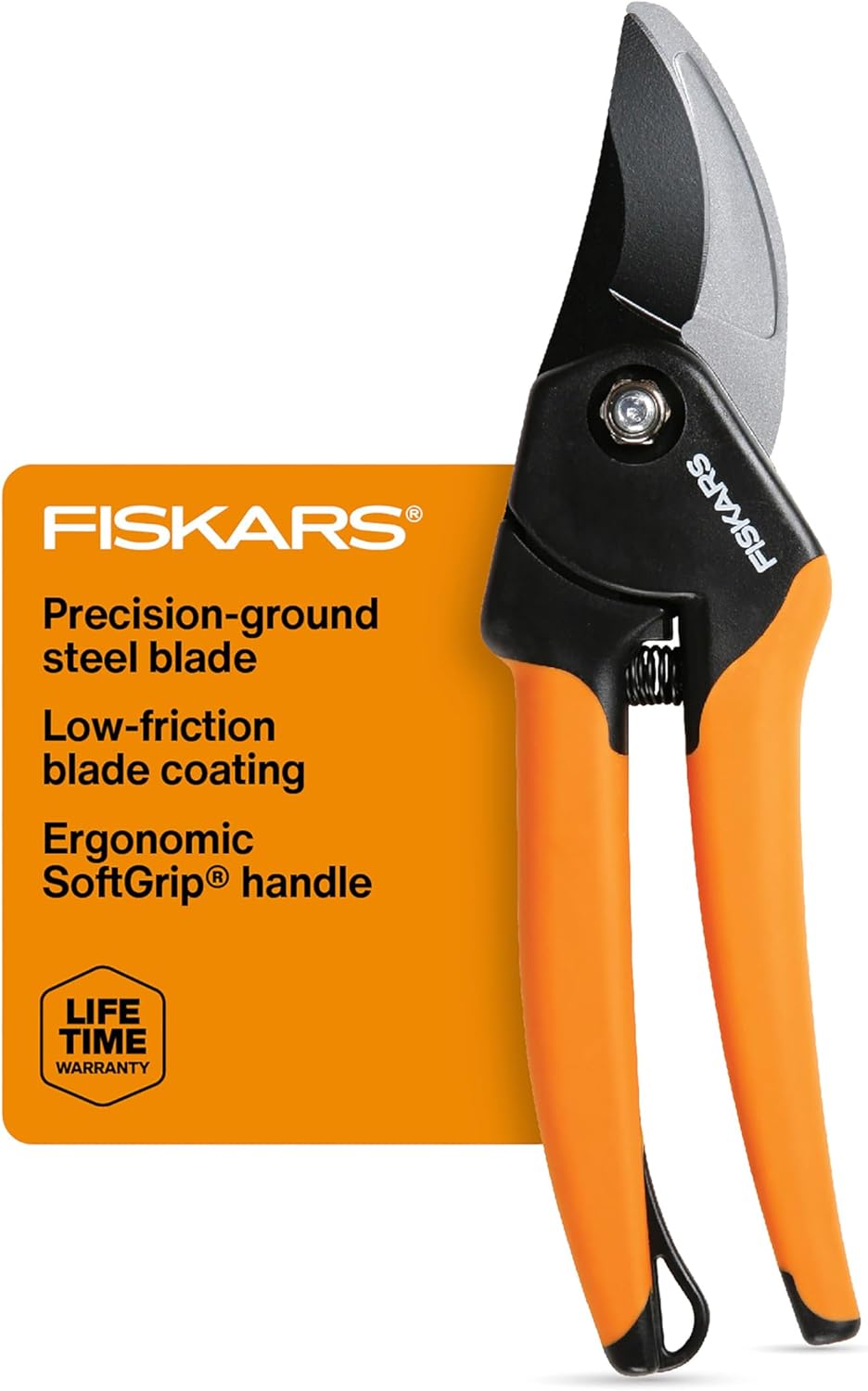
Fiskars SoftGrip Bypass Pruning Shears, 5/8" Cut Capacity Garden Clippers
A stated 5/8 inch cut capacity and SoftGrip handles, which makes it the easiest pruner here to recommend to someone buying their first pair
5/8 inch is the ceiling, so anything thicker moves to loppers, and it will not feel like forged aluminum in the hand
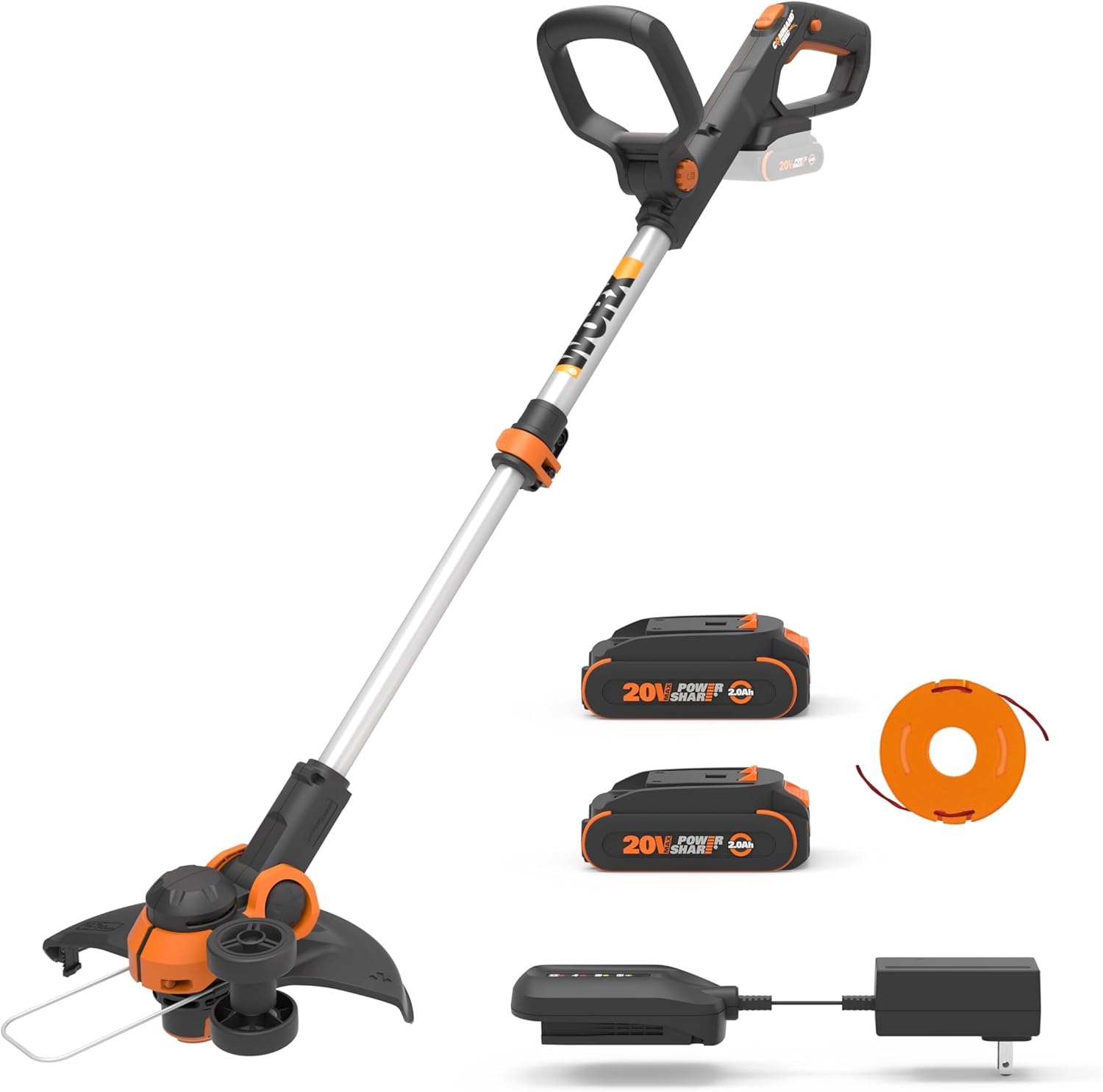
WORX 20V 12" 2-in-1 Cordless String Trimmer & Electric Lawn Edger, WG163
One tool and one 20V battery platform for trimming and edging, and a 12 inch swath that cuts the number of passes on a real lawn
Runtime and battery care become part of your routine, and a wide swath is clumsy between tight plantings
Prices and availability were captured from Amazon Creators API and may change.
How I judge tools that have not hit hour 100
My rule is simple and unpopular: nothing gets called durable on day one. April is the month of marketing. Any pruner looks sharp in April. Any trimmer spins in April. The verdict comes in October, after the tool has logged 100 hours in the Dirt Ledger, my dated and numbered log of hours, measurements, and failures.
Before a tool earns a slot, I check four things.
The tang first. On a hand tool, that is the steel extension of the head running up inside the handle. A full-length tang is the difference between a tool that lasts a decade and one that twists loose in August. If a manufacturer will not tell you how far the steel runs, that silence is the review.
The ferrule second. That is the metal collar where the handle meets the head, and it is the first thing to fail on a cheap tool. Wood that cracks under the ferrule after one season is a design failure, not bad luck.
Steel hardness third. Rockwell hardness is the number that tells you whether an edge will roll in clay or chip on a knot. I want a mid-range blade that resharpens instead of shattering. A spec sheet that says "duty grade" without a number is telling you where the money went.
Swing weight fourth. I weigh handles on a kitchen scale to the gram, because balance is a number, not a feeling. A tool with bad swing weight wears your shoulders out by hour three.
Then the calendar does the rest. Caliper check at 25 hours. Handle wiggle test at the ferrule. A dated photo for the ledger. And finally one Ohio winter of freeze-thaw cycling, the torture test that cracks cheap plastic heads and composite handles. Everything below is a judgment about design and job fit. The durability verdicts come later, and the ones that fail get their autopsy photos posted, because failures teach more than survivors.
The two bypass pruners: where the money actually goes
Both of these are bypass pruners, which means the blade slices past a hook instead of coming down on a flat anvil. Bypass cuts clean and heals fast. Anvil pruners crush, and crushed stems invite disease. For living wood, bypass is the only answer.
The Fiskars SoftGrip states its capacity plainly: 5/8 inch. That is a green-wood tool. It handles pencil-thick shoots, spent perennials, tomato suckers, and the soft new growth you get on a rose in June. It will not handle a two-inch dead limb, and no amount of squeezing will change that. What it does have is the SoftGrip handle, which matters more than people admit once your hands are wet and cold in late October, and the Fiskars brand behind it. I have watched that company replace a fiberglass handle without a receipt fight, and that warranty behavior is a real part of the value. This is the pair I would put in a first-time gardener's hand, and the pair I would keep as a spare in the shed.
The Haus & Garten ClassicPRO takes the other approach. An 8.5 inch blade, a titanium-coated edge, and a name that promises professional, premium, and heavy duty in the same breath. Here is what that coating does and does not do. A titanium coating reduces friction, sheds sap, and resists corrosion. It does not make the steel harder, and it does not hold an edge for you. The number I want is underneath the coating, and if the listing will not give you a Rockwell figure, ask why. What the longer blade buys you is real, though: more leverage per squeeze and a wider mouth for thicker cuts, which is exactly what you want on shrubs you have been ignoring since spring.
The honest trade-off between them is weight against capacity. The longer, heavier pruner does more work per cut and tires your hand sooner. The lighter one is a pleasure for an hour of deadheading and useless on anything woody. If you cut green stems all season, take the Fiskars. If your shrubs are overgrown and you are cutting wood, take the ClassicPRO. If you have both kinds of work, that is why the second pair lives in the shed.
One maintenance note that applies to both: sharpen the bevel only. People who file the flat side of a bypass blade turn a slicer into a crusher in about ninety seconds.
The WORX WG163: two tools, one battery
The pitch of the WG163 is in the name. It trims, then it converts to an edger, so you are not buying a second machine and not storing one either. For a lawn that needs both jobs every other week, that is the whole argument.
The 12 inch swath is the number that matters most. A wider cutting path means fewer passes, and fewer passes means less time walking back and forth along a fence line. On a third of an acre, that adds up fast. The trade-off is the opposite case: a 12 inch head is awkward between boxwood and a foundation wall, and you will still want hand shears for the tight spots. That is not a flaw, it is a reason to keep a pair of pruners on the same hook.
Two things I check before buying any cordless trimmer. First, whether the kit in front of you includes the battery and charger, because a bare tool and a full kit are different purchases at different prices. Second, what platform the 20V battery belongs to, since the value of any cordless tool is really the value of the battery family you are joining. A trimmer that shares batteries with tools you already own costs you far less per season than one that starts a new platform.
And the winter rule, because I have watched more cordless tools die in storage than in use: batteries do not live in an unheated shed through an Ohio freeze-thaw cycle. Bring them inside, charge them to roughly half, and they will be there in March.
The Sunday Green Machine: liquid feeding and clay
Two bottles covering 10,000 square feet works out to roughly 5,000 square feet per bottle, which is a useful number if you know your lawn area. Most people do not, and that is the first thing to fix, because over-application is how a fall feeding becomes a runoff story.
Liquid fertilizer behaves differently from granular. It goes out with water, so it moves into the root zone quickly, which is exactly what you want on clay that has gone tight and dry in September. Granular releases over a longer window and feeds more slowly, but it also sits on the surface until water carries it down. On my beds, liquid gets a faster visible response; granular holds the color longer. Neither is better in the abstract. The soil decides.
Which brings me to the part nobody wants to hear. Nitrogen on compacted clay is money poured on a parking lot. If your soil is hard enough that a screwdriver will not go in, the fertilizer is not the problem, and it is not the solution either. Aerate, add organic matter, and read a soil test before you spend anything. The Sunday Green Machine is a good fall tool for a lawn that is already growing and already hungry. It is not a repair kit.
Timing matters as much as product. Feed while the turf is still actively growing, not after top growth has stopped and the ground is cold. Late nitrogen on dormant grass is a gift to the weeds and a risk to the crown when the first hard freeze lands. And if you are overseeding this fall, sort out your starter versus weed-and-feed sequence before any of it goes down, because the wrong order wastes both products.
What each one costs you per season of service
Price per season of service is the only honest number in tool buying, and the four products here sit in four different cost structures.
The pruners are one-time purchases. You buy them once, sharpen them, and if the design is good, you replace a spring or a blade instead of the tool. That is why I care so much about repairability and about the ferrule holding tight: a pruner that survives five seasons is cheap at almost any price, and a pruner that dies in August is expensive at any discount.
The trimmer is a platform investment. The tool is the cheap part; the batteries and the family they belong to are the real cost, spread across every cordless tool you buy afterward. Buy into a platform deliberately, not accidentally.
The fertilizer is a consumable, and its cost scales directly with turf area. Ten thousand square feet per 2-pack is the number to divide by your actual lawn size, because the per-application cost is the only figure that tells you whether it fits your budget.
Check current Amazon price on each of these, since all four move with the season, and run the season math yourself rather than trusting a sticker.
Which one to buy first
If you are starting from nothing, buy in this order.
First, a soil test. It is the cheapest thing on this list and it decides everything downstream, including whether you need the fertilizer at all.
Second, pruners. For most gardeners, the Fiskars SoftGrip at a stated 5/8 inch capacity covers the work. If your shrubs are woody and overgrown, the Haus & Garten ClassicPRO's longer blade and heavier build is the better first pair.
Third, the trimmer, but only if you actually have turf to maintain. The WORX WG163 makes sense for a real lawn that needs both trimming and edging, and less sense for a courtyard of beds.
Fourth, the fertilizer, and only after the test comes back saying the lawn is hungry and the soil is workable.
What I am testing next
The fall durability pass is underway. Fourteen tools from the spring cohort are past their 100-hour mark, and each one is coming into the shed for a caliper check, a handle wiggle test at the ferrule, and a dated photo for the Dirt Ledger before the first hard freeze locks the beds. Two already failed this year, a painted spade with a cracked collar and a pruner whose rivet walked loose, and both get their autopsy photos posted this week. The failures teach more than the survivors, every single time.